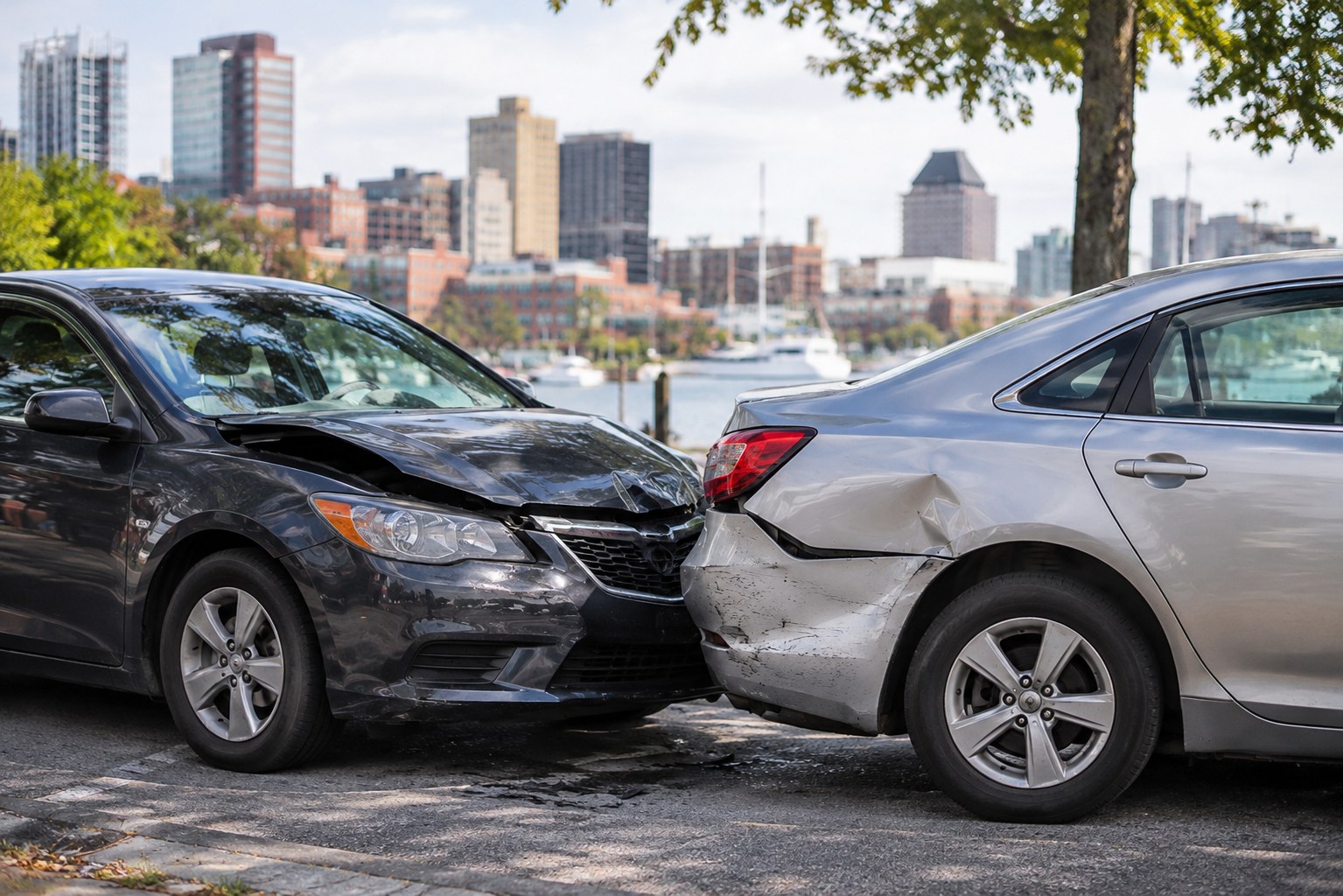
Rideshare trips are a common way to get around Baltimore and reach the airport. When a crash involves a rideshare vehicle, insurance questions can be more complex than in an ordinary collision. The driver’s app status, the trip stage, who caused the crash and the available policies can all matter.
Maryland has rules requiring coverage during the different stages of a rideshare trip. The applicable limits and policy terms depend on the stage and facts of the crash, so preserve the trip details and obtain the coverage information before assuming which policy applies.
Why a Rideshare Claim Can Involve Multiple Policies
A claim may involve the rideshare driver’s personal policy, coverage maintained for transportation-network services, another driver’s insurer or more than one of these. Personal policies may exclude some losses that occur while a vehicle is used for paid rides. The applicable terms and statutory requirements determine which coverage is available; do not assume that a personal policy or company policy automatically applies.
How App Status Affects Coverage
Maryland regulations distinguish three coverage periods: the driver is logged on and ready for a request; the driver has accepted a request and is traveling to pick up the passenger; and the passenger is being transported until leaving the vehicle. The required insurance applies across these periods, but coverage details and limits can differ. Confirm the relevant policy and trip stage using the records for the specific crash.
Maryland law also provides for exchanging information during a coverage investigation, including the driver’s logged-on and logged-off times in the 12 hours before and after the crash and a description of the coverage, exclusions and limits. Ask that this information be preserved and obtained through the appropriate claims process.
Rideshare Traffic Around Baltimore
Pickup and drop-off activity around the Inner Harbor, Fells Point, Federal Hill, Canton and Mount Vernon can involve sudden stops, curbside turns and pedestrians sharing busy streets. Higher-speed routes such as I-83, I-95 and the Beltway have different hazards, including traffic merging and driver distraction. A crash may involve passengers, other motorists, pedestrians or cyclists. Document the location and conditions without placing yourself in danger.
Steps to Take After a Rideshare Crash
Prioritize safety and medical care. Call emergency services when needed and seek prompt evaluation for injuries. Tell the treating clinician that the symptoms followed a vehicle crash, and follow medical advice.
If it is safe, report the collision to police and record the report number. Photograph vehicle positions, visible damage, road conditions and the scene. Save the trip receipt or app screen showing the driver, vehicle, trip time and route. Collect witness contact information if possible. Keep medical records, bills, receipts and documentation of missed work. Report the crash through the rideshare platform and to the relevant insurers, describing known facts without guessing about fault.
Keep copies of messages and claim numbers. Before signing a release or settlement, understand what claims it resolves and whether it prevents later recovery for additional losses.
Maryland’s Contributory-Negligence Rule
Maryland generally applies contributory negligence in negligence cases: if a claimant’s own lack of due care is found to have contributed proximately to the injury, recovery may be barred, subject to legal exceptions and the facts of the case. Insurers may investigate each party’s actions, so preserve evidence and avoid speculating about fault. Whether the rule applies to a particular claim is a legal question.
Deadlines and Evidence
Maryland’s general statute provides a three-year filing period for civil actions from the date the claim accrues, unless another law provides a different period. Special rules or exceptions may affect a particular claim. Do not treat the general period as a reason to delay: video, witness recollection, vehicle data and trip records can become harder to obtain over time.
Frequently Asked Questions
Can a passenger make a claim after a rideshare crash?
A passenger may pursue an applicable claim based on the facts, injuries and coverage. The driver’s trip stage can affect which insurance coverage applies. Preserve the trip record and seek medical care for injuries.
What if I was driving for a rideshare service and another vehicle hit me?
A claim may involve the other driver’s policy and, depending on the facts and applicable terms, other coverage such as uninsured or underinsured motorist coverage. Keep the app status, trip records, crash documentation and income records relevant to the loss.
Should I accept an early settlement offer?
Before accepting or signing a release, review what losses it covers and whether future claims are waived. The full extent of an injury or its costs may not be known immediately. Settlement terms and available options depend on the case and applicable law.
Preserving a Rideshare Claim Record
A rideshare collision may involve injuries, lost income, multiple insurers and records held by a platform. Save the trip details, document the scene and treatment, and request that relevant app-status and insurance records be preserved. Maryland’s coverage periods, liability rules and deadlines depend on the facts, so verify the requirements for the specific claim.