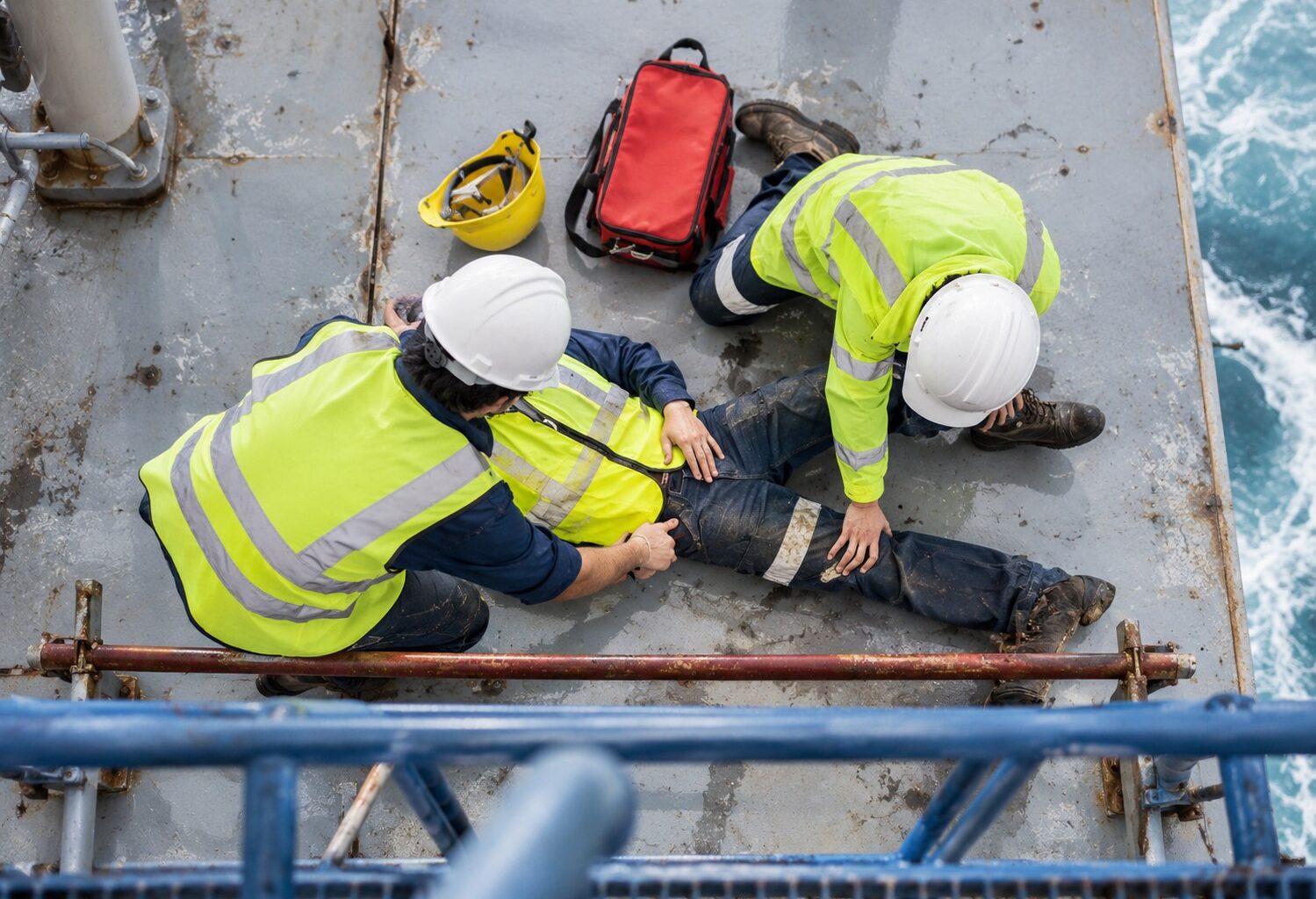
An injured worker on an offshore platform may assume the platform operator is the employer responsible for an injury. Offshore worksites often involve operators, drilling contractors, equipment providers and subcontractors. Which company may be liable depends on the worker’s legal status, the site and task, who controlled the work, and what caused the injury.
The Largest Company on the Platform May Not Be the Employer
A platform project may include an operator, drilling contractor, crane company, maintenance crew and specialty contractors. Each may have its own employees, supervisors, equipment and procedures. The company that issues a paycheck may not be the only entity with relevant control, and the company that owns equipment is not automatically liable for every injury.
In 2024, U.S. construction had 1,034 workplace fatalities; 389 involved falls, slips or trips and 244 involved transportation incidents. Offshore work can involve additional maritime and remote-site hazards, so identifying the applicable safety and compensation framework is an important first step.
Determine Worker Status and Applicable Law
One threshold question is whether the worker qualifies as a seaman under the Jones Act. The test considers whether the worker’s duties contribute to a vessel’s function or mission and whether the connection to a vessel in navigation is substantial in both nature and duration. No single job title or percentage automatically decides every case. A fixed offshore platform is generally treated differently from a vessel; workers assigned to a mobile drilling unit may require a fact-specific analysis of their duties and vessel connection.
Workers who are not seamen may qualify for coverage under the Longshore and Harbor Workers’ Compensation Act, but coverage depends on statutory status and location. The Outer Continental Shelf Lands Act extends that compensation framework to certain workers injured in qualifying operations on the outer continental shelf, while excluding vessel crew members. The applicable law can therefore depend on whether the incident occurred on a vessel, a fixed platform, a dock or another location.
When compensation coverage applies, the employer’s statutory liability is generally exclusive. A worker may still have a claim against a legally distinct third party whose negligence contributed to the injury. The relationship between workers’ compensation and any third-party recovery may involve reimbursement or subrogation rights.
Who Controlled the Work?
A staffing contractor may hire a worker while an operator’s supervisor directs tasks at the site. In some cases, courts consider whether another company exercised sufficient control over the details of the work to be treated as a borrowing or additional employer. The analysis depends on the evidence and governing law; a paycheck, work schedule or equipment source alone may not resolve it.
More than one company may have duties or potential responsibility. Investigators may examine who gave instructions, who supplied or maintained equipment, who controlled the work area and who had authority to stop an unsafe task. Each company’s role must be assessed separately rather than assuming the platform operator or the direct employer is automatically responsible.
Records Can Help Establish Control and Cause
Relevant evidence may include maintenance and inspection logs, equipment records, work permits, shift assignments, training materials, incident reports and the names of supervisors who gave instructions. Safety and compliance records may also help establish what procedures were required and followed.
Records may be overwritten, crews may rotate off a site and contractors may disperse after a project. Preserve photographs, messages, contact information and incident details promptly. Document who owned the equipment, who set the schedule, what task was underway and who could stop the work.
The Platform Owner’s Role
An operator or platform owner may have duties related to site access, hazards it created or controlled, or conditions it knew about. Whether a duty was delegated, retained or breached depends on the contract, the location, applicable law and the specific facts. A subcontractor’s involvement does not automatically resolve the owner’s responsibility, and ownership alone does not establish liability.
Contractual Indemnity and Insurance
Offshore contracts often allocate defense, indemnity and insurance obligations among companies. Those provisions do not necessarily decide an injured worker’s claim, and enforceability depends on the governing law, contract wording and facts. Texas and Louisiana have statutes that restrict certain indemnity arrangements connected to oil and gas operations. For qualifying outer-continental-shelf work, the law of an adjacent state may apply when it is applicable and not inconsistent with federal law. These rules have exceptions and should not be treated as a blanket rule for every offshore contract.
What an Injured Worker Can Document
Record the names of direct supervisors, contractors, equipment owners and witnesses; note the task being performed and the exact location; and keep copies of medical and incident records. Preserve any work instructions, photographs or messages related to the event. Avoid assuming that the largest company name on a vessel or platform identifies every responsible party.
Offshore injury claims can involve overlapping maritime, compensation and state-law questions. Worker status, location, work control, negligence and contract terms all matter. The applicable framework must be identified before responsibility or recovery options can be assessed.