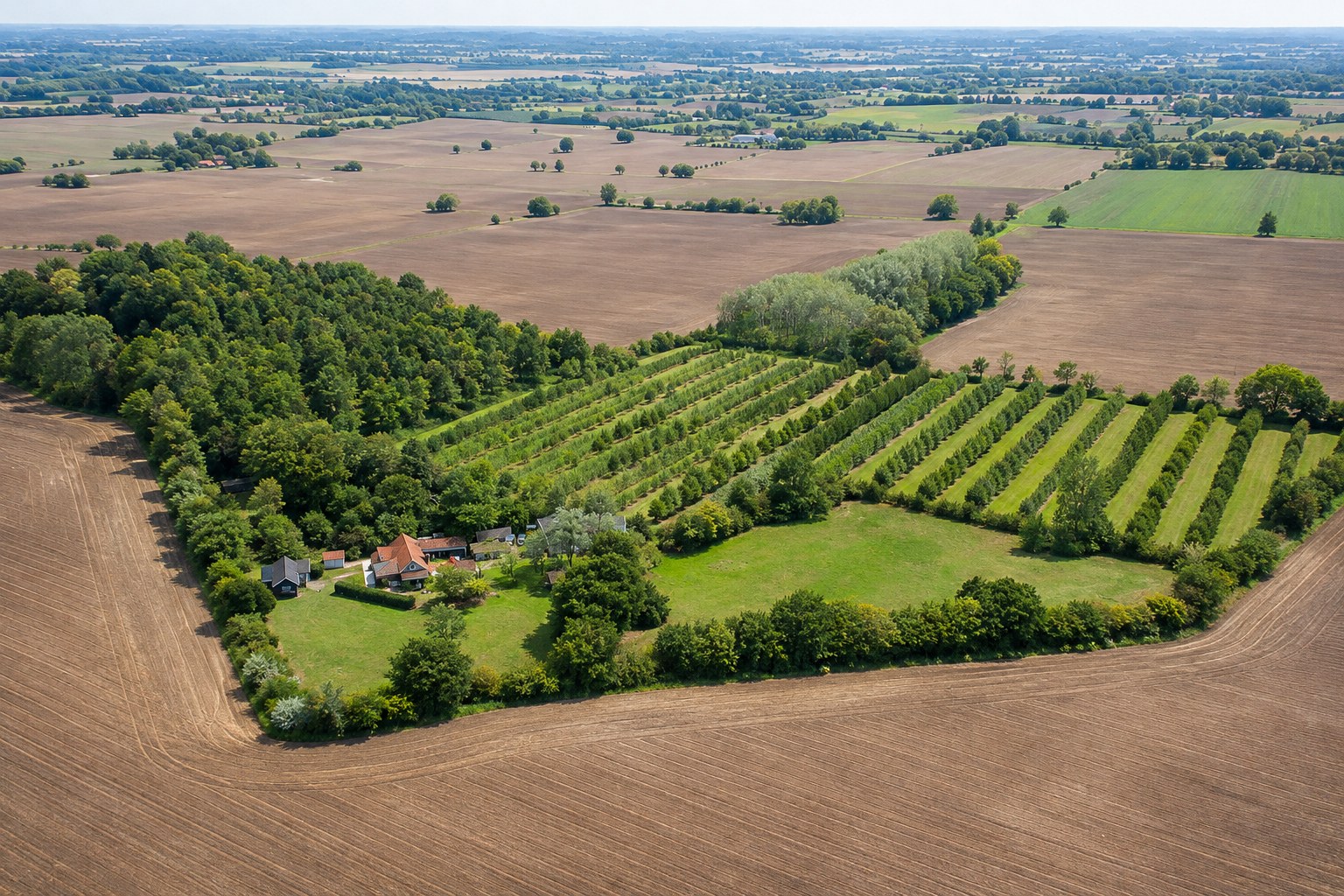
Tree farms cultivate, harvest, and care for plants used in landscape projects that call for mature specimens. Managed growing conditions allow regular health checks and preparation for transplanting. Here are several ways a tree farm contributes to successful landscape development:
Growing Healthy Trees
A tree farm raises plants suited to local soil and climate. Regional selections can handle hot summers and cold winters. Plants grown in native soil adapt to local conditions and can use available nutrients effectively.
Tree-care professionals monitor plant health and may prune roots before transplanting to encourage a dense root system. Trees grown in a similar region may be adapted to its climate, though successful establishment still depends on proper planting and aftercare.
Assessing the Yard
Tree professionals evaluate a site before installation. They examine soil, sun exposure, drainage, and available space to select a tree suited to its setting, including room for mature canopy and roots. The assessment also helps plan a safe route for heavy delivery equipment. Crews measure gate openings, note overhead wires, and take steps to avoid unnecessary turf damage. Yard measurements guide equipment access and placement. Specialists consider the tree’s growth habits alongside drainage and spacing at the new site. These checks help position roots where water and nutrients are available, reducing transplant stress and supporting deeper establishment.
Cleaning the Crown
Crown cleaning removes dead, diseased, or weakened branches from the upper canopy. Clearing damaged wood can limit decay and open the canopy so sunlight and air reach healthier growth. Improved airflow also reduces dense foliage that blocks moving air.
Wind places extra stress on weak limbs, while a more open canopy allows air to pass among branches. Removing hazardous growth reduces falling debris around the property. Selective pruning also balances the canopy, preventing one side from becoming overly heavy. It can direct water and nutrients toward healthy branches rather than declining wood, supporting new shoots and foliage during the growing season.
Applying Mulch Seasonally
Mulch can moderate soil temperature and slow evaporation, helping retain moisture between rain and irrigation. For newly planted trees, a broad layer about 2–3 inches deep can help conserve water; keep mulch away from the trunk and leave the root flare visible.
More consistent soil moisture can reduce heat stress. Organic mulch also contributes material as it breaks down. Avoid piling it against the trunk, where persistent moisture can harm bark; keep the base of the tree clear.
Loose mulch lets rain soak into the ground instead of pooling. Routine checks help prevent mulch from becoming too deep, compacted, or uneven. Useful maintenance steps include:
- Pulling weeds that compete for moisture and nutrients
- Loosening compacted bark to improve airflow and water penetration
- Removing mulch that has decomposed or accumulated excessively
Removing Trees and Clearing Debris
Removal may be necessary for a dead or damaged tree or one presenting a property hazard. Trained professionals use rigging to control how branches and trunk sections descend, helping protect nearby areas. Crews then clear branches and other debris. Stump grinding can remove remaining stumps, including larger ones in challenging locations, leaving the site ready for future landscape work.
Consult Tree Farm Professionals
Tree farms support residential and commercial planting by growing specimens for future installation. Site conditions, mature size, proper planting depth, and ongoing watering all influence whether a transplanted tree establishes successfully.