Early Life and Family Background
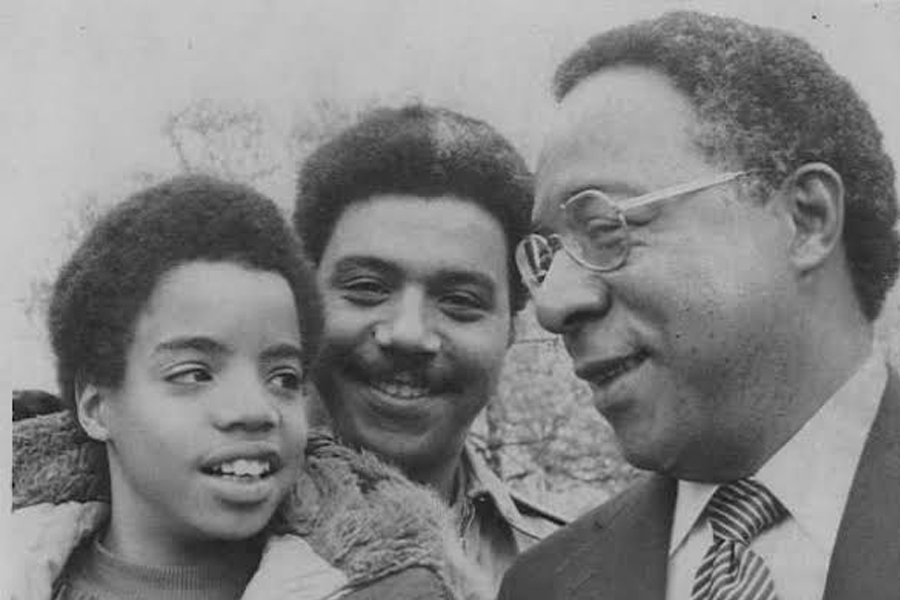
Bill or William Alex Haley was born in Beaufort, North Carolina, on November 19, 1945. He was the only child of famous author Alex Haley and Nannie Virginia Branch Haley. Roots: The Saga of an American Family and The Autobiography of Malcolm X made his father famous, but William’s life went differently.
William was raised with stories, family recollections, and ancestry awareness. Simon Alexander Haley, his paternal grandfather, influenced him. His grandson was influenced by Simon, an agricultural professor and educator, and his family history passion.
William grew up in Beaufort, North Carolina, New York City, and other locales related to his father’s military career. William lived in New York in the 1950s and remembers the turmoil of his parents’ divorce in the 1960s.
There was more to the Haley family than usual. It valued names, memories, migration, education, and ancestry. These themes were part of William’s boyhood before he started safeguarding his father’s legacy.
William Alex Haley and His Parents
William was the son of Alex Haley, born Alexander Murray Palmer Haley on August 11, 1921, and Nannie Virginia Branch Haley, born in 1925.
Alex Haley served in the U.S. Coast Guard before becoming a writer. His determination to reconstruct his family’s African and American ancestry eventually produced Roots, one of the most influential works of twentieth century American literature.
Nannie was born in Beaufort, North Carolina, which gave William a particularly strong connection to the region. She remained associated with Beaufort later in life and survived her son, dying in 2013.
Alex and Nannie married in the early 1940s and divorced around 1964. William therefore grew up during a period when his father’s professional identity was changing dramatically. By the time Roots became a cultural phenomenon in 1976 and 1977, William was already an adult and had established his own military career.
William’s Siblings and the Wider Haley Family
William was part of a larger family network connected to Alex Haley’s marriages and relationships. Among the consistently identified siblings are Lydia Ann Haley, associated with Beaufort, North Carolina, and Cynthia Gertrude Haley Dunn, who lived in Atlanta.
The Haley family tree also reaches backward through several generations that became central to Alex Haley’s genealogical research. William’s paternal grandparents were Simon Alexander Haley and Bertha George Palmer Haley. Simon’s influence was particularly significant because he represented the educated, disciplined family patriarch who valued history and learning.
The ancestry associated with the Haley and Palmer families includes figures such as Queen Jackson Haley, Alec Haley, Cynthia Babica Murray Palmer, and William Edward Palmer. These names form part of the larger genealogical landscape that Alex Haley explored while tracing the family’s history through slavery, migration, and generations of African American life.
For William, family history was therefore not an abstract academic subject. It was the story of his own household.
Marriage to Gwenevere Jenrette and His Children
During the 1970s, William was married to Gwenevere Jenrette, who worked as a medical specialist at Fort Dix hospital. Their family included a son, William Alexander Haley Jr., who later became known as Bill Haley Jr.
Bill Jr. was still a child during the height of his grandfather Alex Haley’s fame. Around 1977, when he was approximately 12 years old, he was already collecting newspaper and magazine articles about his grandfather. The experience gave him a front-row view of the extraordinary cultural impact of Roots.
William Sr. later married Barbara Wall Haley, who was associated with Columbia, South Carolina. At the time of William’s death, his immediate family included his sons William Alexander Haley Jr. and Todd Alexander Haley, daughter Tara Haley, and three granddaughters.
The family also maintained connections with other branches of the Haley family. These relationships became especially important after Alex Haley died because the responsibility of protecting and interpreting his legacy increasingly passed to younger generations.
His Military Career and Vietnam Service
William Alex Haley chose a life of military service. He served in the U.S. Army and became a paratrooper with the 101st Airborne Division.
His military career included service in Vietnam, where he earned a Bronze Star. He later served as an Army recruiter and instructor and eventually retired at the rank of First Sergeant.
One of his most distinctive assignments involved human relations education at Fort Dix, New Jersey. Beginning around 1973, he worked in the Army’s Human Relations Department, teaching subjects involving race relations, cultural understanding, discrimination, and interpersonal relationships.
His instruction reached an enormous audience. Estimates associated with his educational career place the number of military personnel and civilians exposed to his programs somewhere between 300,000 and 500,000 people.
I find this part of William’s career especially revealing. His father’s work explored how history shapes identity, while William spent his professional life helping people understand how culture and prejudice shape relationships in the present.
Education and Public Service
William continued his education while building his military career. His academic background included a Bachelor of Science from the University of Maryland, a master’s degree from Webster University, and a Doctorate of Letters from Central Christian University.
He also completed training through the Department of Defense Race Relations Institute. The experience gave him specialized preparation for addressing difficult questions involving racism, sexism, culture, and human behavior.
William was also an active member of the Disabled American Veterans. His career consequently combined military service, education, public speaking, and community involvement.
His Role in Preserving Alex Haley’s Legacy
After Alex Haley died in 1992, William increasingly became a guardian of his father’s cultural legacy.
He served as CEO of the Alex Haley Foundation and founded and led the Alex Haley Center for Cultural Values. He was also involved with museum and cultural projects associated with Alex Haley and the continuing preservation of the family’s history.
William believed strongly that family history could have practical value. Genealogy was not simply about collecting names and dates. It could help people understand identity, strengthen family connections, and give younger generations a clearer sense of where they came from.
His work also extended into organizations connected with Roots and The Autobiography of Malcolm X. He was associated with the Keeper of the Word Foundation, an organization concerned with preserving important literary materials.
He participated in Africa related heritage initiatives, museum programs, speaking engagements, and cultural projects. In 2011, for example, he donated Roots related painted panels to the Mebane Historical Museum in North Carolina.
Alex Haley’s Genealogical Methods and William’s Connection to Them
William’s intellectual inheritance came from Alex Haley’s genealogy.
Alex started with generations-old oral traditions. Tennessee relatives remembered unexpected evidence concerning an African ancestor named “Kin-tay,” a river named “Kamby Bolongo,” and a “ko.”
He then compared recollections to documents. He researched censuses, deeds, courtroom materials, libraries, historical collections, maritime statistics, and British records.
Linguistic research that linked the strange terms to Mandinka was a breakthrough. That hint led Alex to Gambia.
He discovered the griot tradition of oral historians preserving genealogy and clan history in Juffure. Alex found a remarkable link between the American family’s oral traditions and West African history in the Kinte family account.
Alex also did immersive research. He explored West Africa and life on a ship to comprehend the Atlantic slave trade.
William inherited more than this research’s fame. The task fell to him to justify family history.
Bill Haley Jr and the Next Generation
William’s son William Alexander Haley Jr., often called Bill Haley Jr., continued this family mission.
Bill Jr. became involved with heritage projects connected to The Gambia, including visits to the Juffureh and Albreda area associated with the Kinte family story. He has participated in educational and cultural initiatives designed to connect descendants and communities across the Atlantic.
He also became involved with The Inherited Roots Project, working with Malick Manga on projects involving heritage, education, and technology transfer.
The younger Bill represents another generation carrying the family story forward. His work demonstrates how Alex Haley’s research evolved from a book into a continuing cultural conversation.
The Family After Alex Haley’s Death
Alex Haley died in 1992 after suffering cardiac arrest in Seattle. His death created complicated responsibilities for the family, particularly concerning his estate, manuscripts, personal possessions, and historical materials.
The estate faced substantial financial difficulties, with debts and disputed property interests contributing to auctions and other efforts to settle obligations. Family members did not always agree about how Alex’s possessions and papers should be handled.
William became involved in this complicated period while simultaneously developing his own legacy projects. His role was not simply that of a son protecting famous memorabilia. He was trying to preserve a broader historical mission.
The Haley family also participated in reunions and heritage travel, including an African homeland journey associated with the family and later commercial partnerships. These activities helped transform genealogy into an experience shared by multiple generations.
William Alex Haley’s Later Years
William remained connected to North Carolina and South Carolina throughout his later life. Beaufort was particularly meaningful because it was his birthplace and his mother’s hometown.
He continued speaking, supporting historical projects, participating in family events, and promoting the importance of documenting personal ancestry.
Unlike his father, William did not become a major literary celebrity. His influence was quieter. His battlefield service, educational work, public speaking, foundation leadership, and preservation efforts formed a different kind of legacy.
On December 17, 2012, William died at the VA Medical Center in Durham, North Carolina, at the age of 67. He had battled diabetes for years.
He was buried at Fort Jackson National Cemetery in Columbia, South Carolina. His death marked the passing of an important member of the Haley family, but the work he supported continued through his children, grandchildren, relatives, museums, foundations, and heritage organizations.
Family Relationship Table
| Family Member | Relationship to William Alex Haley | Notable Details |
|---|---|---|
| Alex Haley | Father | Author of Roots and The Autobiography of Malcolm X |
| Nannie Virginia Branch Haley | Mother | Born in Beaufort, North Carolina |
| Simon Alexander Haley | Paternal grandfather | Educator and major influence on Alex Haley’s family history |
| Bertha George Palmer Haley | Paternal grandmother | Teacher and member of the Palmer family line |
| Lydia Ann Haley | Sister | Associated with Beaufort, North Carolina |
| Cynthia Gertrude Haley Dunn | Sister | Associated with Atlanta |
| Gwenevere Jenrette | First known wife | Worked at Fort Dix hospital |
| Barbara Wall Haley | Later wife | Associated with Columbia, South Carolina |
| William Alexander Haley Jr. | Son | Heritage advocate and successor in family legacy work |
| Todd Alexander Haley | Son | Lived in Columbia, South Carolina |
| Tara Haley | Daughter | Lived in Columbia, South Carolina |
| Alex Haley | Son’s grandfather | Pulitzer Prize winning writer and genealogist |
| Bill Haley Jr.’s children | William’s grandchildren | Part of the continuing Haley family lineage |
Death and Family Legacy
The death of William Alex Haley connected various familial threads. He was a soldier, educator, historian, speaker, spouse, father, and son, but his most notable role was as a generational bridge.
His life linked his military discipline to his father’s historical fascination. He knew that ancestry might shape the future and chronicle the past.
His family participates in commemorations, museum projects, African heritage, and education. William’s contribution to Roots’ family tale is remembered as anniversaries honor Alex Haley.
FAQ
Who was William Alex Haley?
William Alex Haley was the only son of author Alex Haley and Nannie Virginia Branch Haley. Born in 1945, he became a U.S. Army veteran, race relations instructor, speaker, historian, and advocate for preserving his father’s cultural and genealogical legacy.
When was William Alex Haley born?
William Alex Haley was born on November 19, 1945, in Beaufort, North Carolina.
Who were William Alex Haley’s parents?
His parents were Alex Haley, the author of Roots, and Nannie Virginia Branch Haley, who was from Beaufort, North Carolina.
Did William Alex Haley serve in the military?
Yes. William served in the U.S. Army, including service as a paratrooper with the 101st Airborne Division. He served in Vietnam and received a Bronze Star before later retiring as a First Sergeant.
What did William Alex Haley do at Fort Dix?
At Fort Dix, William worked in human relations education and taught programs involving race relations, cultural history, discrimination, and interpersonal relationships. His programs reportedly reached hundreds of thousands of military personnel and civilians over the course of his career.
Who was William Alex Haley Jr.?
William Alexander Haley Jr., also known as Bill Haley Jr., was William Alex Haley Sr.’s son and Alex Haley’s grandson. He became involved in heritage initiatives connected to The Gambia, the Kinte family story, and the continuing preservation of the Haley family’s ancestral legacy.
How was William Alex Haley related to Alex Haley?
William was Alex Haley’s only son. His life was therefore closely connected to one of America’s most famous literary families, although William developed his own career in the military, education, public speaking, and cultural preservation.
What organizations did William Alex Haley lead?
His activities included leadership of the Alex Haley Foundation and the Alex Haley Center for Cultural Values, along with involvement in museum projects, heritage organizations, and initiatives dedicated to preserving family history and African American cultural heritage.
When did William Alex Haley die?
William Alex Haley died on December 17, 2012, at the VA Medical Center in Durham, North Carolina. He was 67 years old.
Where was William Alex Haley buried?
He was buried at Fort Jackson National Cemetery in Columbia, South Carolina.
Why was family history important to William Alex Haley?
Family history was central to William’s worldview because he grew up within the family that inspired and supported Alex Haley’s groundbreaking genealogical research. William believed that understanding ancestry could strengthen identity, relationships, education, and connections between generations.