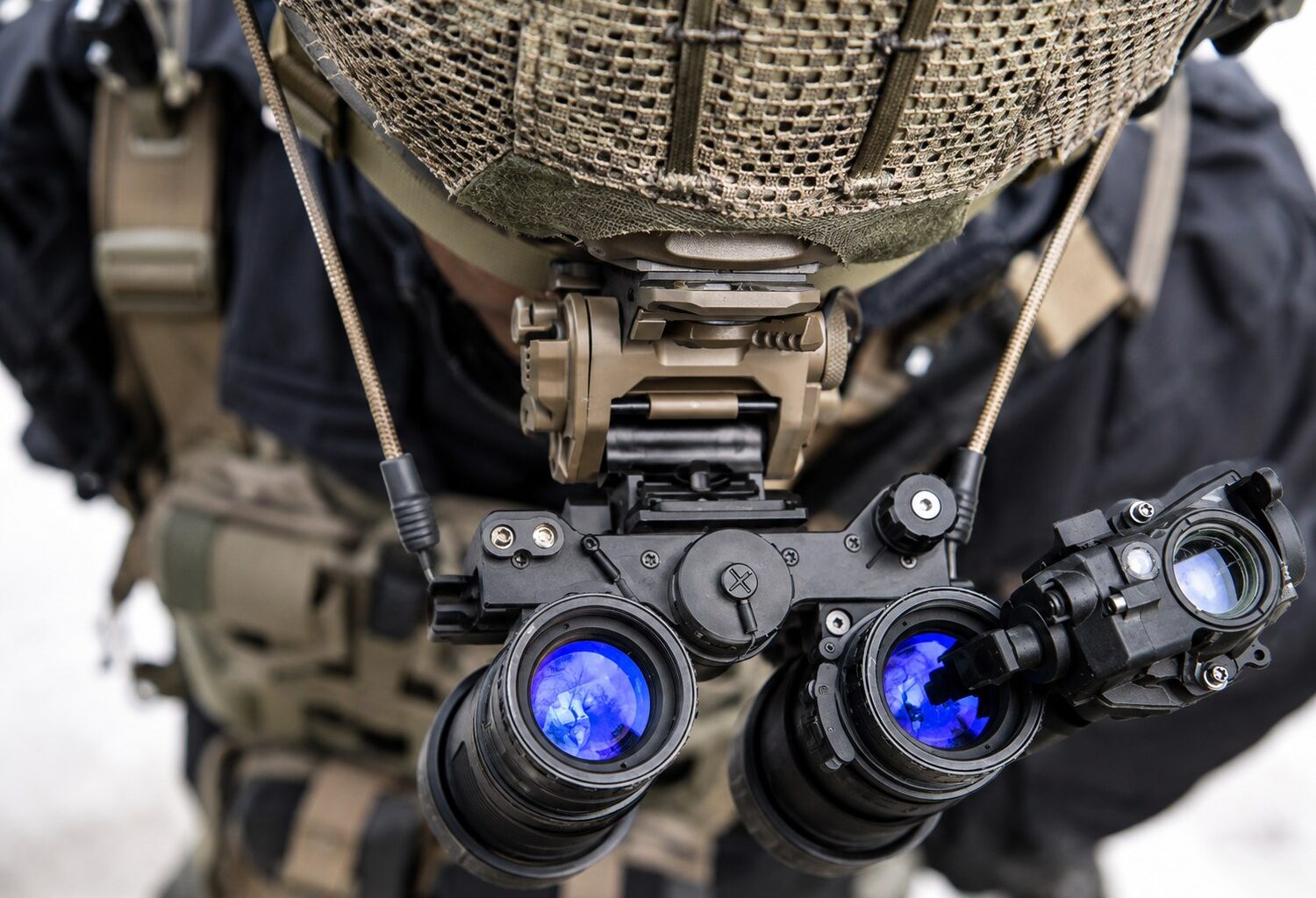
Night-vision equipment has shifted from a military specialty to a more common law-enforcement tool over the past decade. Lower equipment costs, wider access to surplus through the LESO program, and growing awareness of its tactical uses have contributed to that change.
The consequences for operational capability and officer safety are significant and deserve context.
The Tactical Challenges of Low Light
Many violent crimes occur at night or in poorly lit settings. Officers responding may rely on visible flashlights or vehicle lights, which can disclose their position and reduce tactical surprise.
Night vision changes that situation. Equipped officers can function in darkness without visible illumination, assess potential threats before making their presence known, and move through places that would otherwise need lighting that reveals their location.
Operational Characteristics of White Phosphor
Conventional image-intensifier tubes produce a green view through green phosphor. White phosphor night vision goggles use a different coating to display a monochrome image. Many law-enforcement users find this easier on the eyes over extended use and report less fatigue.
Users often describe the contrast as more natural than green imagery when moving between ordinary vision and the device. That may shorten acclimation and assist threat differentiation. These are modest advantages, but they can matter when equipment is used for long periods by teams with varied experience.
Training Is a Key Factor
Equipment alone does not create night-vision capability. Training is at least as important. Night vision changes how users perceive images, depth, and field of view, all of which may affect movement, threat identification, and use-of-force decisions.
Agencies that introduce night vision into tactical work invest in equipment-specific training, including scenarios that reflect the situations in which the devices will be used. Familiarity with the controls alone is not enough.
Plan for Compatible Equipment
Goggles may require compatible aiming equipment, such as infrared lasers visible through night vision but not unaided eyes. Planning may also include infrared illuminators for low ambient light and night-vision-compatible flashlights for transitions between environments. These components call for a coordinated equipment plan rather than a standalone goggle purchase.
Departments should consider the full system—from an officer’s headgear through weapon equipment—when planning acquisitions.
Build Accountability into Deployment
Night-vision capability also raises documentation and oversight questions. Operations in darkness may require deliberate procedures for recording and review. Body-worn cameras, for example, may perform differently in low light and could need specific configuration to document activity adequately.
Responsible deployment incorporates the technology into use-of-force policies, training standards, and operational documentation, not only purchasing decisions.
Conclusion
Night vision can expand law-enforcement capability, but its value depends on proper training, compatible equipment, and clear policy. Agencies that plan across all three areas may gain operational and safety benefits. Treating the device as an isolated equipment purchase can leave much of its potential unrealized.
Frequently Asked Questions
What is the LESO program, and how can law-enforcement agencies participate?
The Law Enforcement Support Office (LESO) program, also known as the 1033 program, lets eligible local agencies acquire surplus military equipment without charge beyond administrative fees. Night-vision devices have been transferred through it. Eligibility and availability vary, and interested agencies can contact their state coordinator.
Are there documented examples of night vision improving law-enforcement outcomes?
Agencies that have systematically deployed and trained with night vision report better tactical outcomes in relevant settings. Public outcome data is limited for operational-security reasons, while the tactical rationale is informed by established military experience.