A life near the bright lights yet outside their glare
I think of Kimball Gage as a figure standing just offstage, close enough to feel the heat of the spotlight yet content to keep his own place in the wings. Born on October 30, 1950, and passing away on May 8, 2008, he was the middle child of a famously photographed Hollywood family, and still his story is one of quiet presence. Much of what the public can say about Kimball is anchored in the simple cadence of family milestones and the occasional glimpse through archival photos. No boisterous headlines, no exhaustive resume, no tour of celebrity appearances. Instead we find the kind of life that most people live, even if their beginnings were etched beside marquee names.
Roots in Hollywood’s golden age
Kimball’s mother was Esther Williams, the swimmer turned MGM screen star whose water ballets were a signature of midcentury movie magic. His father, Ben Gage, sang and announced on radio and television and occasionally appeared on camera. Their marriage in 1945 sat squarely in the era when Hollywood molded glamour like glass, lighting it from within. The family that followed arrived in an atmosphere of studios, soundstages, and publicity stills, yet Kimball’s relationship to that world appears mostly in captions and family mentions rather than personal limelight.
It is striking how often the stories of celebrity households center on the parent whose name eclipses the rest. But families are always more than their most visible star. The rhythms of ordinary days still beat beneath the arc lamps and poster art. Kimball’s life reads like that quiet rhythm, steady and sincere, marked by those who knew him rather than by commercial bravura.
Brothers, sisters, and the constellation of home
Kimball was one of three children born to Esther Williams and Ben Gage. His elder brother, Benjamin Gage Jr, arrived in 1949. His younger sister, Susan Tenney Gage, came in 1953. In childhood images, the trio forms a small constellation around their mother, sometimes gathered poolside, sometimes in living rooms softened by midcentury furnishings. Those scenes suggest what every family knows, regardless of public status. Siblings are companions and co-navigators through the currents of youth, sharing schools and vacations, learning each other’s strengths in the everyday acts of growing up.
The family changed shape in 1958, when Esther Williams and Ben Gage divorced. In time, Esther married Edward Bell, who became the children’s stepfather. The family boundaries widened, then settled. What endures across such changes are the names and relations we carry into our adult lives, the network that forms the core of who we are to others.
A private path outside the industry’s spotlight
Unlike his mother and father, Kimball did not leave behind a long public ledger of roles, appearances, or professional credits. Instead, the public record speaks softly. There are memorial pages, family notices, and genealogical entries that mark his presence without turning it into spectacle. I read that absence not as mystery but as choice, or at least as a shape of life that favored privacy. Many children of renowned performers choose ordinary lanes where the decisive acts are not performed for a crowd. The achievements are the bonds maintained, the friendships tended, the family moments remembered.
There is a particular grace in a life that does not require expansive public notation. Not every story is meant for the marquee. Some stories are best kept within the circle of loved ones and are felt deeply rather than broadcast widely. Kimball’s path belongs to that quieter tradition.
Glimpses and traces in the public eye
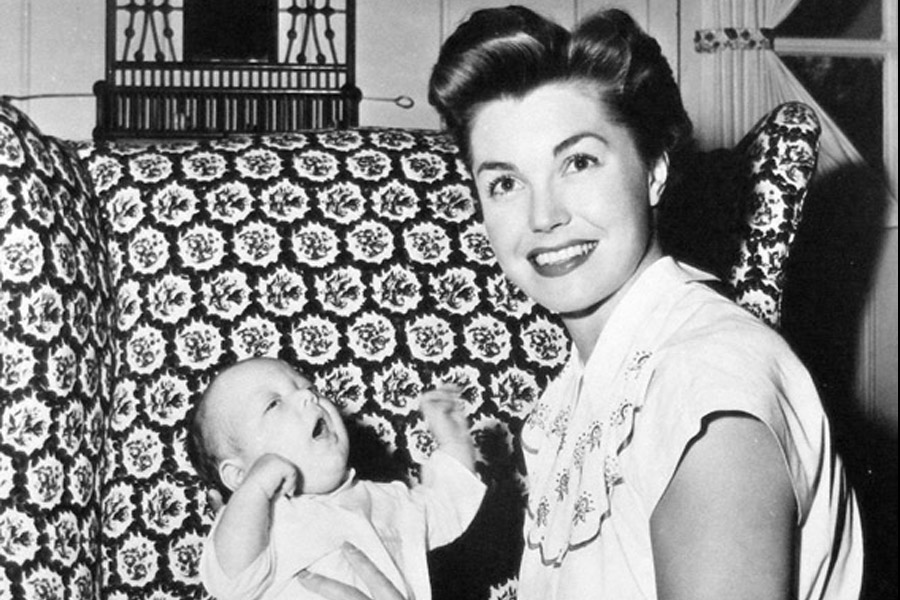
Every now and then, Kimball appears in the public eye through archival photographs that place him as the small boy beside Esther Williams. These images are a time capsule that carry the color and brightness of midcentury press culture. They do not speak to his private interests or career beyond family context. They simply affirm his place in a family once watched by the world for its cinematic novelty and its carefully curated glamour.
Beyond those glimpses, we find the sober milestones any biography is built upon. Birth. Parents. Siblings. A stepfather who embraced a blended family. The date of passing. These facts form a skeletal outline of his story, as if we were sketching a shoreline and choosing to leave the interior landscape to those who walked it with him.
Timeline and family milestones
- 1945: Esther Williams and Ben Gage marry, beginning a high profile union remembered in Hollywood histories.
- 1949: Birth of Benjamin Gage Jr, the eldest of the siblings.
- October 30, 1950: Birth of Kimball Austin Gage.
- October 1, 1953: Birth of Susan Tenney Gage, the youngest sibling.
- 1958: Divorce of Esther Williams and Ben Gage, a family transition that echoes the realities behind celebrity life.
- April 28, 1978: Passing of Ben Gage, father to Benjamin Jr, Kimball, and Susan.
- May 8, 2008: Passing of Kimball Gage, noted in memorials and family notices.
Taken together, these dates map a family’s evolution across decades. They trace the arcs of joy, change, and loss that every household faces, even when some members have names that once lit up theater marquees.
The human echo of a life
When I think about Kimball, I hear a gentle echo rather than a loud refrain. The echo is human scale. A son, a brother, part of a blended family. Someone whose memory is held in the private language of relatives and friends. It reminds me that legacies do not need headlines to matter. Legacies exist in the careful hand offered, the laughter inside homes, the presence felt at gatherings. In families that live beside fame, the most powerful stories often belong to those who did not court attention but grounded the household with an unassuming steadiness.
Hollywood can be a carnival of mirrors. It dazzles. It multiplies images. It tempts us to measure life by visibility. Yet the quieter measure is the truer one. A life is not its press clippings. It is the regard of those who knew you. Kimball Gage shows how a person can be known within a world that knows you largely as a name in a family line. Quiet lives are not small lives. They are constellations we see best when the bright lights dim and our eyes adjust to the stars.
Family threads and remembrance
The thread running through this family story is continuity. A mother who became an icon of cinematic water and grace. A father whose voice belonged to the era of radio and television variety. Three children who found their own paths amid the changing seasons of a public household. A stepfather who supported the family through later years. This is a tapestry with well known colors at the edges and softer, lived textures at its center. Kimball’s life is woven into that tapestry, steady and intact.
FAQ
Who were Kimball Gage’s parents?
Kimball Gage’s parents were Esther Williams, the celebrated swimmer and MGM film star, and Ben Gage, a radio and television singer and announcer who also appeared on screen.
Did Kimball Gage have siblings?
Yes. He was the middle child. His older brother was Benjamin Gage Jr, and his younger sister was Susan Tenney Gage.
Was Kimball Gage involved in show business?
There are no widely noted public records of Kimball pursuing a high profile entertainment career. Public mentions focus on his place within the family rather than professional credits.
What is known about his stepfather?
After her divorce from Ben Gage, Esther Williams married Edward Bell. He is publicly noted as Kimball’s stepfather.
When was Kimball Gage born and when did he pass away?
Kimball Austin Gage was born on October 30, 1950, and he passed away on May 8, 2008.
Are there public controversies associated with him?
No. Public records do not highlight controversies or tabloid stories centered on Kimball. Mentions are primarily familial and memorial in nature.
How is Kimball remembered today?
He is remembered through family notices, memorial entries, and the occasional archival photograph alongside his mother and siblings. His story is a reminder that lives can be meaningful without public spectacle.