A designer’s eye and an academic heart
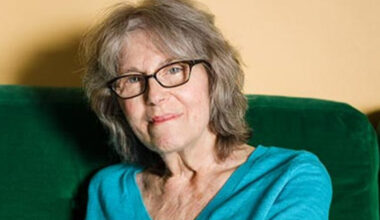
I first met Julia Wasilewski’s work through a gallery of production photos, the kind that catch the breath with their gentle precision. She is a theatre designer who moves with ease between set, costume, and lighting, stitching atmosphere to narrative. Her portfolio traces a steady path of design practice and teaching, with credits like The Late Night Ghost Show, Caretakers, Fritters in Kandahar, As It Is In Heaven, and others that reveal her taste for textured worlds and clean visual storytelling. Julia’s work is the sort you feel more than you immediately notice, proving that restraint can be as powerful as spectacle.
She also stands in the academy, listed as an Associate Professor on leave in Fine Arts at the University of Lethbridge. That dual role has always fascinated me. Some designers live entirely inside the rehearsal room’s controlled chaos. Julia splits her time between the studio and the classroom, guiding students while continuing to build new spaces on stage. It is a balancing act that asks for rigor, patience, and the kind of curiosity that never quite sleeps.
Her education reflects a clear foundation in technical craft. Training in set and costume design, along with a strong grounding in theatre production, shows up in her portfolio choices. Julia’s designs sit in conversation with script and performance, using shape, surface, and light to emphasize a story’s pulse rather than overpower it. That approach reminds me of a careful orchestra conductor, coaxing the ensemble to breathe together.
Origins and influences
When I sift through Julia’s work, I sense a designer who studies the script the way a botanist studies a leaf, looking at veins and edges, searching for how the whole living thing is supported by small decisions. Her process feels meticulous and generous. Costumes are tailored to character arcs, sets carve out paths for performers to move through, and lighting leans in to support the emotional temperature of a scene.
As a teacher, those instincts translate into structured guidance. Students need frameworks that are both practical and imaginative. Julia’s presence in higher education suggests she values process, drafting, collaboration, and a clear chain of production. It is one thing to build a beautiful set model. It is another to lead a team in turning that model into something that breathes under show lights, made on time and within budget. She teaches the whole arc of production, and the lives of her designs reflect that whole-arc thinking.
Family threads
The name Wasilewski carries a recognizable echo thanks to Julia’s brother, the actor Paul Wesley. Public biographies name their parents as Agnieszka and Thomas or Tomasz, and list three sisters alongside Paul: Monika or Monica, Leah, and Julia. That constellation surfaces periodically when Paul’s career comes up, but Julia’s own work and life sit at a gentler distance from fandom and celebrity press. It is clear she has chosen to keep public attention focused on her design and teaching rather than on family relationships.
I like that choice. The theatre world has a way of rewarding the loudest, while the most consistent craft often belongs to those who keep their heads down and let the work speak. Julia’s family appears steady in its public mentions, visible yet respectful of personal privacy. Beyond Paul’s star, you get glimmers of Monika and Leah as private individuals, living lives that do not seek the limelight. The family picture is one of connection without spectacle, threads woven rather than displayed.
Work on stage
Sets can be maps or memories. Julia favors memory maps. Silent rooms with occasional movement. Furniture for line-pivoting performers. Light-catching fabrics for murmured asides. The Late Night Ghost Show indicates a playful spine where shadows and timing matter as much as obvious objects. Fit and character life are considered when making costumes. Respect is shown for how silhouettes capture time and culture in clothing.
Lighting is the quiet painter in her toolkit. The color choices stay intelligent, the angles precise, the cues layered to guide audience attention without shouting. All of these choices require conversations with directors, stage managers, technicians, and performers. Design is a social art, and Julia’s body of work looks fluent in collaboration.
Teaching and mentorship
In the university setting, Julia’s role transforms from maker to mentor. Students rarely need a single answer. They need a way to ask better questions. How does the scene need to feel, and why. What does the actor need from this costume at hour two, not just at minute ten. How will a set piece roll on and off without clipping a lighting tree. The classroom is where the vocabulary of professional theatre is learned piece by piece. Julia’s teaching record and course presence suggest a designer who values clarity, responsibility, and the slow accumulation of craft.
The phrase Associate Professor on leave signals that academia is not a fixed post so much as a continuum. Designers often move between university obligations and production seasons, bringing fresh experience back to students. That cycle closes the gap between learning theatre and doing theatre. In that way, Julia’s teaching becomes a bridge.
Recent highlights and public presence
Julia’s portfolio shows active work into the 2020s, including projects noted in 2023. The cadence of production credits suggests ongoing engagement with regional companies and ensembles, and a continued commitment to design across disciplines. Her social media footprint appears modest. A public-facing account exists but seems private in practice, a choice that tracks with her general approach to visibility. The work is the thing, not the broadcast.
Net worth speculation does not apply to a designer and teacher in the way it does to screen celebrities. The numbers are not the story. The story is the production calendar, the rehearsal schedule, the student showcase, the premiere, the load-out, and the next design packet. It is running notes and taped floors and coffee at tech.
FAQ
Who is Julia Wasilewski?
Julia Wasilewski is a theatre designer and academic who works across set, costume, and lighting design. She has also served as an Associate Professor in Fine Arts at the University of Lethbridge, listed publicly as on leave. Her career bridges professional productions and higher education.
What kind of theatre work does she do?
Her portfolio features design across multiple disciplines, with projects that emphasize clean storytelling and detailed craft. She builds environments and wardrobes that support character and narrative, and she uses lighting as a subtle partner to shape mood and focus.
Is Julia related to actor Paul Wesley?
Yes. Public biographies list Julia as one of Paul Wesley’s siblings. Their parents are named as Agnieszka and Thomas or Tomasz, and the siblings include Monika or Monica, Leah, and Julia.
Where has she taught or mentored students?
She has held an academic role in Fine Arts at the University of Lethbridge. Her teaching reflects design fundamentals, production processes, and collaborative practice, guiding students from concept through to execution.
What are some notable productions in her portfolio?
Her listed projects include titles like The Late Night Ghost Show, Caretakers, Fritters in Kandahar, and As It Is In Heaven, along with other productions that show work across the 2010s and 2020s.
Does she have a public social media presence?
A public-facing account exists but appears private in day-to-day use. Julia’s visibility centers on her design and teaching, with the portfolio and institutional listings serving as the most direct windows into her work.
What is known about her net worth or personal finances?
There is no reliable public information about her net worth. Julia’s professional identity is grounded in design and academia, not in celebrity finance coverage.
How private are her family members?
Outside of Paul Wesley’s well known public career, her siblings and parents are generally treated as private individuals. Occasional family mentions appear in public biographies, but personal details remain limited, and Julia’s own emphasis stays on professional design and teaching.