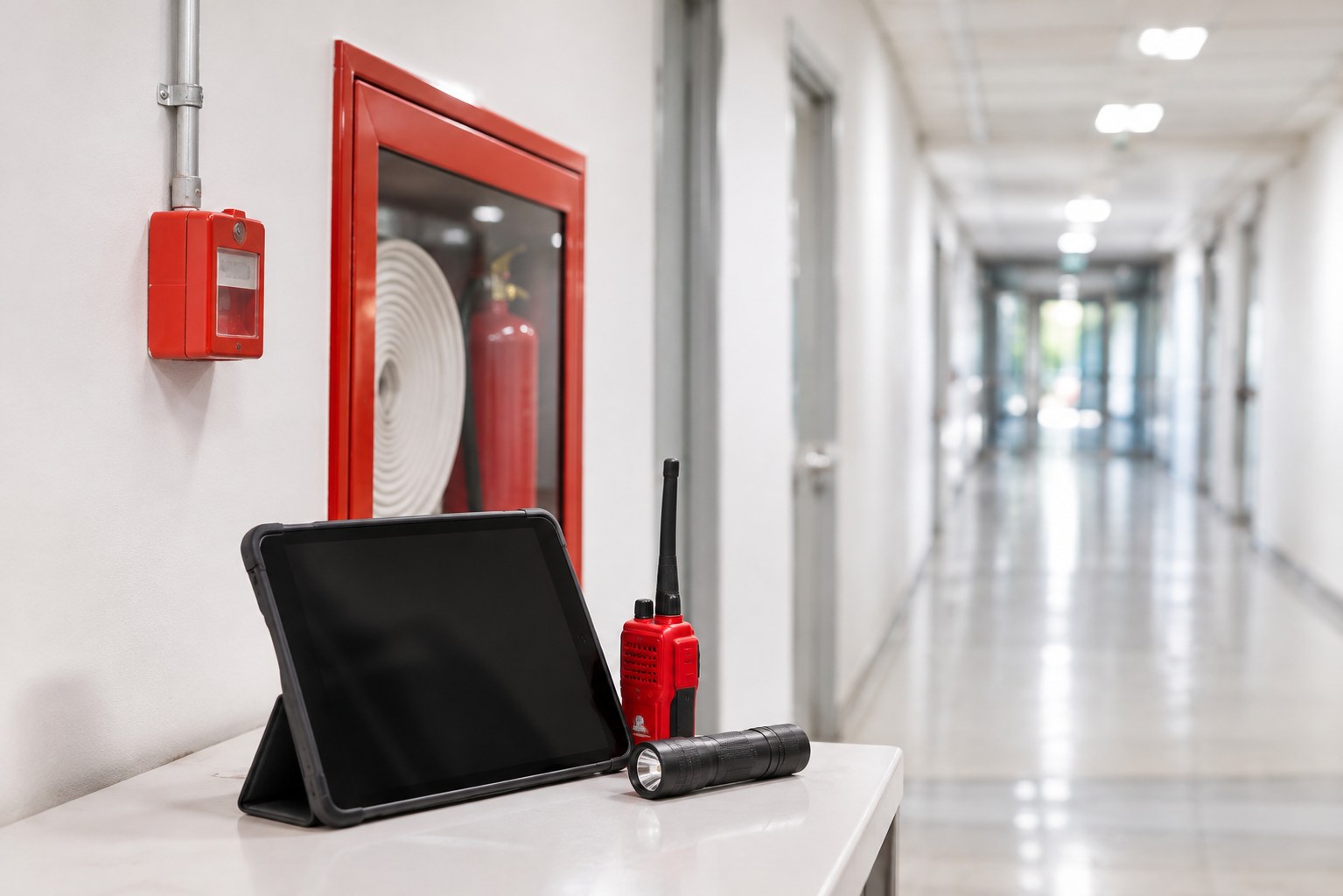
When a fire alarm, sprinkler system or fire pump is impaired, a property manager needs a clear plan for protecting occupants while repairs are arranged. The required response depends on the building, the system affected and direction from the local authority having jurisdiction (AHJ). A fire watch may be required, but managers should confirm scope and duration with the AHJ rather than assume one rule applies everywhere.
Start by Confirming the Outage and Required Actions
Identify which system or area is affected, when the impairment began, and whether backup equipment remains operational. Notify the people responsible for the building’s fire protection systems and follow the reporting procedure required by the AHJ, insurer and property emergency plan. Ask whether occupants may remain, whether part of the building must close, and what temporary measures are required.
Federal emergency-response guidance describes establishing a fire watch when a fire-protection system cannot be repaired or restored promptly. Depending on local direction, assigned onsite security or other workers may be used if they understand the impairment and remain alert for additional incidents. This does not replace instructions from the AHJ or applicable fire code.
Define the Watch Before Coverage Begins
- Area and route: Identify spaces to patrol, including affected floors, concealed areas when directed, exits and access to fire-protection equipment.
- Frequency and staffing: Confirm patrol intervals, staffing levels, shift changes and whether continuous observation is required.
- Alarm and evacuation procedure: Explain how to alert occupants and emergency services if smoke, fire or another hazard is found.
- Communication: Provide reliable contact methods, escalation contacts and a method to reach building management at all hours.
- Duration: Establish when the watch begins, how repairs will be tracked, and who can authorize it to end.
Choose Personnel for the Assignment
Whether using trained employees or an outside provider, verify that each person knows the building, the impairment, the patrol route and emergency procedures. Ask about relevant training, supervision, relief coverage, response time, insurance and the ability to keep staffing in place through shift changes. A generic security assignment may not satisfy the fire-watch duties set by local officials.
Keep Clear, Timely Records
Maintain an impairment log with the system and location affected, start time, notifications made, instructions received, repair updates and the name of the person coordinating the response. Patrol records should show the time and areas checked, observations, corrective actions and any calls to emergency services or officials. Use the format required by the AHJ and retain records with the building’s safety documentation.
Coordinate Repairs and Reinstatement
Keep the fire-protection contractor, building staff and AHJ informed about repair progress. Do not end a required fire watch solely because a repair appears complete. Confirm that the system has been tested, returned to service and accepted under the applicable procedure, and obtain direction on ending temporary measures.
Questions to Ask a Fire-Watch Provider
- Can personnel meet the required start time and remain through the full outage?
- What training, site briefing and supervisory support are provided?
- How are patrols and incidents documented, and can records be shared promptly?
- What happens if a worker is delayed, calls out or identifies a hazard?
- Are the scope, staffing, minimum hours and charges stated clearly in writing?
Frequently Asked Questions
Does every system outage require a fire watch?
Requirements vary by jurisdiction, building and impairment. Contact the AHJ promptly and follow its directions and the building’s emergency procedures.
Can existing building staff serve as the watch?
That may be permitted in some circumstances, but confirm with the AHJ. Assigned personnel need to understand the affected area, required patrols, alert procedures and documentation.
When can the watch end?
Follow the AHJ’s instructions. Usually, the impaired system must be repaired, tested and restored before temporary coverage ends.
Plan for a Controlled Response
Fast notification, clear temporary procedures, reliable staffing and complete logs help managers coordinate a system outage. Confirm requirements locally, keep occupants informed and track the repair through verified return to service.