The man behind the marquee
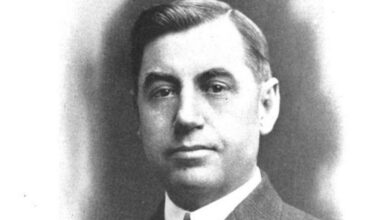
When people hear the surname Jung in American pop culture, they often think of one figure: George, the cocaine smuggler popularized on the big screen. But behind that glare stood a quieter presence, a father whose life unfolded in New England neighborhoods, in the rhythms of work and family. I think of Frederick Jung as a silhouette behind a brighter marquee, the shape that tells you the scene’s true dimensions. His name in full appears as Christian Frederick Fred Jung Jr., though most references to him shorten it to Frederick or simply Fred. He is remembered today as the husband of Ermine O’Neill and the father of George Jacob Jung, a family man first and foremost.
Early years and name
Frederick’s story begins in Massachusetts. He was born on March 7, 1912, with family ties around the Boston area. Medford and nearby towns are part of the landscape that surfaces in family histories. The Jung family would later be closely associated with Weymouth, a suburb where his son George grew up. The name itself can appear in records in several forms. Christian Frederick. Christian Friedrich in older lines. Fred Jr. in everyday use. All versions point back to the same man, a New Englander with Germanic roots whose life stretched across much of the twentieth century.
Marriage and home
In the 1930s, Frederick married Ermine Marie O’Neill. Many family accounts place the wedding in 1936. The couple’s life was rooted in Massachusetts, and their home life reflected the era’s pressures. The Great Depression, the war years, and the long postwar reshaping of American suburbia formed the backdrop. Frederick was described as a small business owner, not the sort of mogul who headlines newspapers, but the kind of proprietor who keeps a household afloat and a community moving. Money was not always easy. The family faced financial strain, a recurring note in stories about George’s childhood, and yet routine stability also threads through that narrative. A father locking up a shop. A mother keeping the house and the calendar. Ordinary life has a quiet music to it.
Fatherhood and the making of a legend
On August 6, 1942, Ermine gave birth to George Jacob Jung. This child would later become infamous, but those early days were simply a family’s beginnings. In later years, as George’s legend grew, the public came to know Frederick through filtered scenes. The father who represented a moral center. The man who showed up, even when storms gathered. It is easy to let the son’s story consume the father’s, yet I see Frederick like a lighthouse on a cloudy coast. He did not control the ship’s course, but he offered a fixed point. The image may be romantic, but it captures a truth about how families are remembered. One member’s drama can cast light backward, shaping how we imagine the generations who raised him.
Roots and ancestry
Family reconstructions trace the Jung line back to earlier German or Alsatian branches, including ancestors recorded as Christian Friedrich. Those older names hint at migration across the Atlantic and the assimilation of European families into New England’s patchwork. As with many American families, surnames adapted over time and language shifted from one generation to the next. While the arc of Frederick’s immediate life is the better documented part, the deeper roots add texture. They place him within a chain of arrivals and adaptations, the classic American story of starting over and making do.
Work and public visibility
What exactly did Frederick do for a living? The simplest and most consistent description is this. He ran a small business. Not a splashy venture, not a public-facing enterprise with press-ready milestones. A shop, a trade, a livelihood. There is no proven record of high-profile civic roles, no headline-ready posts, no public awards. That absence is not a void. It is a portrait of an ordinary working man in midcentury Massachusetts. The very ordinariness matters, because it frames the contrast with the exceptional notoriety of his son. In an era that celebrates extremes, Frederick’s legacy is a steady line.
Later years and passing
Frederick died on May 11, 1988. He outlived many of the storms that would later define his son’s public identity. His wife, Ermine, lived into the year 2000. Through their son, the family name passed to a granddaughter, Kristina Sunshine Jung, who became part of the public conversation in profiles that looked back at George’s life. While those later references keep Frederick’s name present, they also underline the core truth. He was not a celebrity. He was a family man whose chapter closed before the media frenzy that would follow.
Pop culture reflections
Frederick’s face is most familiar to many through a movie. Biographical films about George depict a father named Fred, scenes of a household under pressure, and the emotional tug-of-war between expectation and disillusionment. That portrayal, of course, is dramatized. Films compress time and heighten moments. Even so, the character of the father, as rendered on screen, resonates with how people often describe Frederick in real life. A calm, steady presence. A man who labored to keep a family intact. The cinematic lens can distort, but it can also capture an essence that feels true.
What remains uncertain
There are limits to what is publicly known about Frederick’s business, its exact nature, or its financial details. There is no credible, specific estimate of his net worth. Likewise, the public record contains few long-form obituaries or feature articles focused solely on him. Most mentions appear as pieces of George’s biography, or as entries in memorial and family histories. Those fragments form a mosaic rather than a single authoritative portrait. Still, the pieces fit together well enough to show a life that was grounded in work, marriage, and parenthood.
FAQ
Who was Frederick Jung?
He was Christian Frederick Fred Jung Jr., a Massachusetts native, the husband of Ermine O’Neill, and the father of George Jacob Jung. He is best known today because of his son’s notoriety, yet his own life was that of a small business owner and family man.
When was he born and when did he die?
He was born on March 7, 1912, and he died on May 11, 1988.
Where did he live?
His life was rooted in Massachusetts. The Jung family is closely associated with the Boston area, including towns such as Medford and Weymouth, where his son George grew up.
Who was his spouse?
He married Ermine Marie O’Neill. Family accounts place their marriage in the 1930s, with many citing 1936.
Did he have children?
Yes. His most widely known child is George Jacob Jung, born in 1942. Through George, Frederick became the grandfather of Kristina Sunshine Jung.
What did Frederick Jung do for a living?
He is described as a small business owner. Specifics about the business are not widely documented in public sources, but his role is consistently portrayed as that of a working proprietor supporting a household.
Was he involved in crime like his son?
There is no public record that ties Frederick to criminal activity. The scandals and prosecutions that drew media attention center on his son, George.
How is he portrayed in film and media?
He appears as a key figure in dramatizations of George’s life, often depicted as a steady, principled father who struggles with his son’s choices. These portrayals are dramatized, but they echo recurring descriptions of his personality and role within the family.
What is known about his ancestry?
Family histories trace the Jung line to German or Alsatian roots, with earlier generations recorded under variants like Christian Friedrich. These ancestral lines place the family within a broader European to New England migration story.
Did he hold public office or receive notable honors?
No widely cited evidence points to public office or high-profile honors. He did not attract media attention on his own, and his presence in the public record largely comes through his family connections.
Is his net worth known?
No reliable estimate of his net worth is available. Information about his finances has not been documented in credible public records.
What defined his legacy within the family?
Constancy. He is remembered as the quiet center of a household, a man whose steady work and presence formed the backdrop against which a far more turbulent story would later unfold.