Why one name holds two stories
When I first went looking for Archduke Otto Of Austria, I found not one life but two. The Habsburgs, like an echo chamber of history, gave the same name to two men whose paths could not have been more different. One was a belle époque archduke who lived fast, cast a long shadow across the family tree, and fathered both emperors and gossip. The other was a 20th century statesman who carried an old imperial name into a new democratic Europe. To understand the Habsburgs in their twilight and afterglow, you need both Ottos in view.
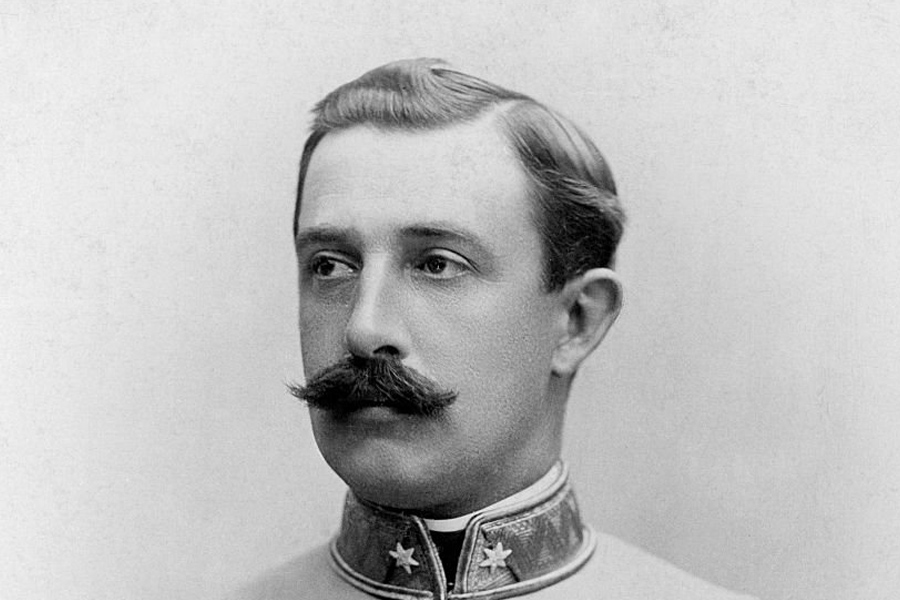
Archduke Otto Franz Joseph of Austria 1865-1906
I picture Otto Franz Joseph standing in a uniform stitched with gold, a product of an empire that still believed its future would look like its past. Born in 1865, grandson of the formidable Archduchess Sophie through his father Karl Ludwig, he occupied a rank that promised ceremony but not sovereignty. Otto Franz did not rule. He belonged to the generation before the world cracked open in 1914.
His life was a mosaic of privilege, duty, and rumor. He wore the titles, held military posts, and performed the expected rites of a Habsburg archduke. He also lived intensely in ways that later biographers could not ignore. Out of his official marriage came an emperor. Out of his unofficial life came a quieter line, recorded in court whispers and genealogical ledgers. Both matter.
Who sits at the center of Otto Franz’s legacy is obvious: his elder son, Charles, who became Emperor Charles I in 1916. But what Otto Franz himself adds to the picture is texture. He was the brother of Archduke Franz Ferdinand. He was a hinge between the brittle grandeur of the late 19th century and the convulsions that followed.
The family web of Otto Franz Joseph
If you trace the threads around him, the pattern clarifies.
- Father: Archduke Karl Ludwig of Austria
- Mother: Princess Maria Annunciata of Bourbon-Two Sicilies
- Siblings: Including Archduke Franz Ferdinand, later heir presumptive
- Wife: Princess Maria Josepha of Saxony
- Legitimate children:
- Charles I of Austria, the last reigning Habsburg emperor
- Archduke Maximilian Eugen of Austria
- Relationship outside marriage: Marie Schleinzer
- Illegitimate children recorded as Edler von Hortenau:
- Alfred Joseph Edler von Hortenau
- Hildegard (Hilde) von Hortenau
These names are not footnotes. They show how dynasties really worked: official unions forging alliances, unofficial ones leaving their mark in quieter lines and changed lives.
Otto Franz died in 1906, before the empire’s great unraveling and before his son wore the crown. His absence while everything changed is part of the story. When the assassination of Franz Ferdinand detonated the old order in 1914, Otto Franz was already a memory, yet his son and brother were the ones history pulled to the center of the storm.
Archduke Otto von Habsburg 1912-2011
Then the name turns, like a coin, and we meet the other Archduke Otto Of Austria: Franz Joseph Otto Robert Maria Anton Karl Max Heinrich Sixtus Xaver Felix Renatus Ludwig Gaetan Pius Ignatius von Habsburg. Most of us know him simply as Otto von Habsburg. Born in 1912, a crown prince in a world that would soon abolish crowns, he spent his adult life designing bridges where his ancestors had built thrones.
His childhood was steeped in ceremony. As a boy he watched coronations and attended imperial rituals. As a young man he witnessed exile. After 1918 the Habsburgs were family first, dynasty second. Otto learned languages, history, and politics across borders. The rawness of the century shaped him. He opposed Nazism vocally and early, helped refugees, and spent wartime years in safety abroad while advocating for a Europe that could outgrow its hatreds.
When the smoke cleared, he dedicated himself to an idea rather than a title. He renounced any claim to the Austrian throne and later served as a Member of the European Parliament for two decades, representing a Christian democratic platform and using the bully pulpit of his name to argue that Europe must breathe with both its western and eastern lungs. He helped guide the Pan-European Union for nearly half a century and lent his prestige to the opening of borders in 1989. In a family history glittering with medals, his most enduring decoration may be the simple fact that he kept showing up where bridges were needed.
The family web of Otto von Habsburg
Around him stands a modern royal diaspora, anchored in memory and public service.
- Parents: Emperor Charles I of Austria and Empress Zita of Bourbon-Parma
- Siblings: Adelheid, Robert, Felix, Carl Ludwig, Rudolf, Charlotte, Elisabeth
- Wife: Princess Regina of Saxe-Meiningen
- Children: Andrea, Monika, Michaela, Gabriela, Walburga, Karl, Georg
- Successor as head of the House of Habsburg-Lorraine: Karl von Habsburg
If the first Otto’s legacy was dynastic succession, the second Otto’s legacy was institutional succession. He passed down not only a name and a heraldic inventory but a commitment to a Europe where law matters more than lineage.
From throne rooms to parliaments
What fascinates me is how both Ottos express the Habsburg pivot from court to commons. With Otto Franz, we see the late imperial court as a stage set, heavy velvet curtains and fragile chandeliers, with backstage doors that opened onto private dramas. With Otto von Habsburg, we watch the scenery being hauled off and replaced with the lighter architecture of a parliamentary chamber.
The first Otto embodies the empire’s muscle memory. He belonged to the cavalry and the court calendar. The second Otto learned the art of coalition. He traded protocols for policy and worked inside the machinery of the European project. His speeches pressed for the dignity of small nations, the moral coherence of a continent, and the reunification of a political geography shattered by war and ideology.
I find it fitting that both Ottos are best understood in relation to Charles. For Otto Franz, Charles is the son destined to inherit a crown. For Otto von Habsburg, Charles is the father whose brief and tragic reign becomes an ethical north star. Different directions, same compass.
Key dates at a glance
- Otto Franz Joseph: born 1865, married 1886, fathered Charles in 1887, died 1906
- Otto von Habsburg: born 1912, heir in exile after 1918, renounced claims to the Austrian throne in the 1960s, served as an MEP 1979 to 1999, led the Pan-European Union at key moments, died 2011
These are not just numbers. They are bar lines in a score: the beat changes from waltz to march to a quieter, steadier rhythm.
Titles, wealth, and what endures
People often ask me what the Habsburgs were worth. The question makes sense in today’s world of lists and rankings, but it fits awkwardly with a family whose estates were tangled in centuries of laws, partitions, and postwar settlements. The better metric for both Ottos is their capacity to convert status into responsibility. One did so by fathering and linking generations within the old system. The other did so by channeling a family legacy into public service across borders. Any ledger that cannot record a bridge across the Danube of 1989 is missing the point.
FAQ
Who exactly is meant by Archduke Otto Of Austria?
The name refers to two prominent Habsburgs. Archduke Otto Franz Joseph of Austria, born 1865, was the father of Emperor Charles I and brother of Archduke Franz Ferdinand. Otto von Habsburg, born 1912, was Charles I’s son and the last crown prince who later became a leading advocate of European integration and a long-serving Member of the European Parliament.
How are the two Ottos related to each other?
Otto Franz Joseph is the grandfather of Otto von Habsburg. The line runs: Otto Franz Joseph to his son Charles I to his grandson Otto von Habsburg.
What were the main family connections of Otto Franz Joseph?
He was the son of Archduke Karl Ludwig and Princess Maria Annunciata. He married Princess Maria Josepha of Saxony and had two legitimate sons, Charles and Maximilian Eugen. Outside marriage he had two children, Alfred Joseph and Hildegard, with Marie Schleinzer, later recorded as Edler von Hortenau. His brother was Archduke Franz Ferdinand.
What were the main family connections of Otto von Habsburg?
He was the eldest son of Emperor Charles I and Empress Zita. He married Princess Regina of Saxe-Meiningen and had seven children: Andrea, Monika, Michaela, Gabriela, Walburga, Karl, and Georg. His son Karl succeeded him as head of the House of Habsburg-Lorraine.
Did either Archduke Otto ever rule the empire?
No. Otto Franz Joseph never ruled and died in 1906. Otto von Habsburg was crown prince by birth but the monarchy fell in 1918 when he was a child. He later renounced claims to the throne and pursued a democratic political career.
What role did Otto von Habsburg play in European politics?
He served as a Member of the European Parliament for two decades, helped lead the Pan-European Union, opposed both Nazi and communist dictatorships, and championed the cause of Central and Eastern European nations entering the European project. He was closely associated with the spirit and symbolism of the 1989 border openings.
Why is Archduke Franz Ferdinand important in this story?
Franz Ferdinand, the brother of Otto Franz Joseph and uncle of Charles I, was assassinated in 1914. His death triggered a chain of events that led to World War I and the collapse of the Habsburg monarchy. Without that event, the trajectories of both Ottos would likely have been very different.
Is there a clear line of succession today in the Habsburg family?
Yes, within the family’s own dynastic framework. Otto von Habsburg passed headship to his son Karl, who represents the family in cultural, charitable, and European civic contexts. While Austria is a republic and the titles no longer carry political authority, the family maintains its historical identity and philanthropic roles.