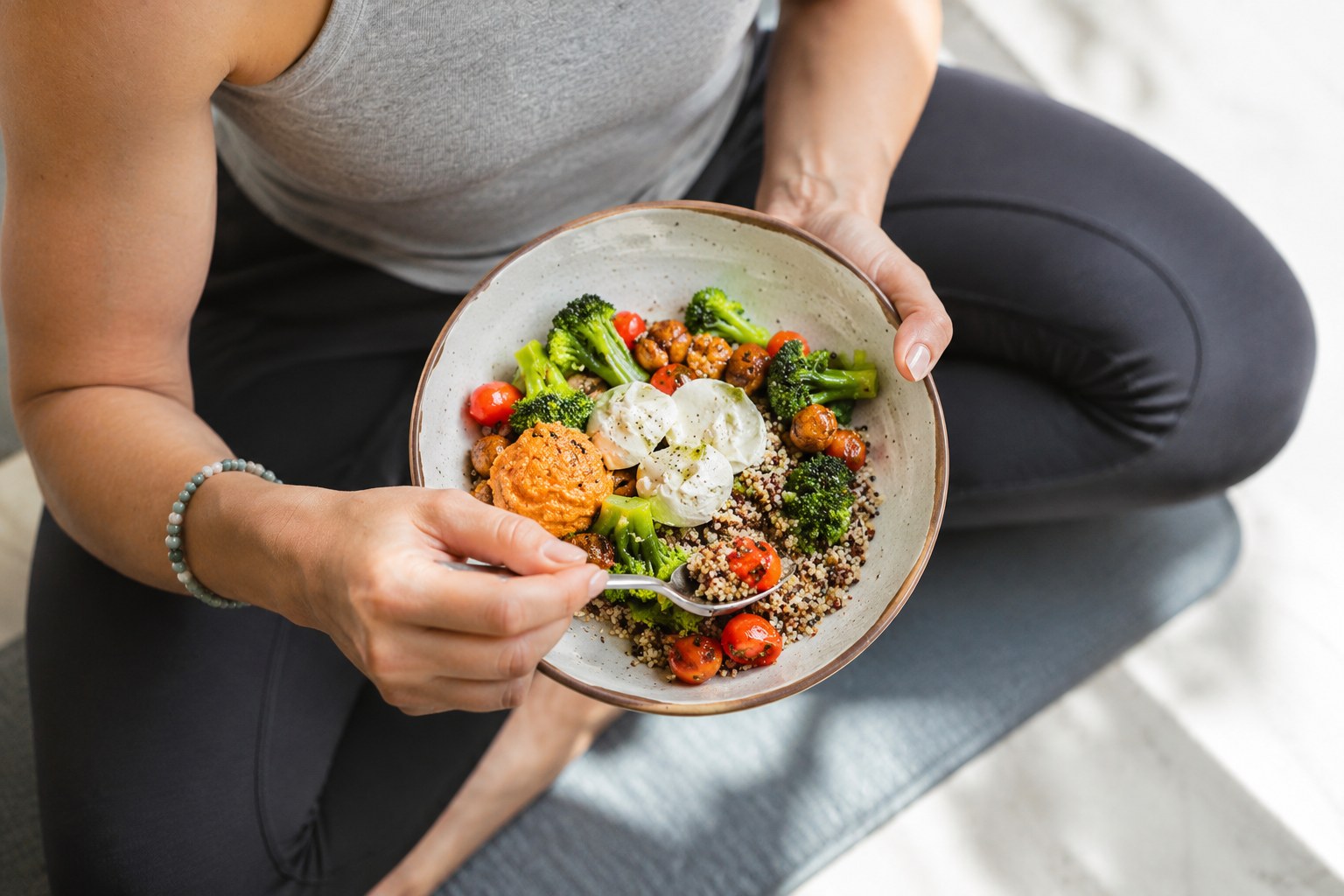
Training consistently but not seeing the progress you expected? Many people treat exercise and eating as separate concerns, even though the body relies on both. Training and nutrition work together; neglecting either can limit results.
The good news is that combining them need not be complicated. When you understand how food supports training, you can build a routine that fits your needs.
In This Guide
- Why a health-first approach beats “more sweat is better”
- How food and exercise complement each other
- Steps for building a personalized plan
- Common progress-stalling mistakes
- Simple changes to start today
Why Health-First Fitness Beats “More Sweat Is Better”
Fitness advice often urges people to push harder. But workouts that leave you exhausted can lead to burnout or injury instead of sustainable progress.
A smarter approach treats exercise and nutrition as parts of one system. A practical plan should reflect a person’s goals, starting point, preferences, and schedule. Here are ways to build one.
How Training and Nutrition Support Each Other
Think of exercise as the engine and nutrition as the fuel. Even a strong engine cannot perform well with poor fuel.
Nutrition matters because:
- Protein supports muscle repair after exercise.
- Carbohydrates and fats supply energy.
- Vitamins and minerals contribute to recovery.
- Hydration affects performance.
A meta-analysis reported that interventions combining diet and exercise produced the most consistent body-composition changes compared with diet-only or exercise-only interventions.
Build a Fitness Plan Around Your Goals
Start by clarifying your objective. Fat loss, muscle gain, and endurance call for different combinations of exercise and nutrition.
Step 1: Make the Goal Specific
Replace a broad aim such as “get healthier” with a measurable target, for example losing 10 pounds in three months or bench pressing 200 pounds by summer. Specific goals are easier to track.
Step 2: Choose Suitable Training
Match activities to the outcome you want:
- Fat loss: Combine strength work with cardio.
- Muscle growth: Use resistance training and gradually increase the challenge.
- Endurance: Progressively build running, cycling, or swimming volume.
- General well-being: Mix cardio, strength, and mobility work.
Step 3: Coordinate Food with Activity
Let nutrition support the work you do. Strength training may call for adequate protein; longer runs increase the need for carbohydrates. Fat loss generally involves a modest calorie deficit. The aim is a suitable match, not perfection.
Step 4: Track and Reassess
Without tracking, it is hard to tell whether a plan is working. Note:
- How many workouts you complete each week
- How you feel during exercise
- Measurements such as weight, waist, and energy
- Sleep quality
After a couple of weeks, review what is not working and adjust accordingly.
Mistakes That Can Slow Progress
Even a good plan can be derailed by common habits.
Eating Too Little
Some people assume that reducing food intake as much as possible speeds results. Underfueling while training hard can leave you tired, undermine performance, and make it harder to preserve muscle. The challenge is to eat enough while still working toward your goal.
Increasing Activity Too Quickly
Going from little activity to six workouts each week can raise injury risk. Start gradually, add intensity over time, and let your body adapt.
Neglecting Recovery
Rest is part of training. Recovery supports repair and adaptation; consistently skipping it can stall progress. Give sleep, stretching, and rest days the same consideration as hard sessions.
Relying on a Generic Program
A routine that works for one person may not suit another person’s age, body, schedule, or goals. Choose a routine that fits your goals, health, schedule, and preferences instead of assuming one template suits everyone.
Simple Steps You Can Take Today
You can start with one manageable change:
- Drink more water: Drink according to thirst, activity, and conditions; fluid needs vary.
- Include protein at meals: Consider eggs, chicken, fish, beans, or tofu.
- Walk 8,000 steps daily: A free, low-impact way to increase movement.
- Sleep 7–8 hours: Rest helps the body recover.
- Schedule workouts: Put sessions on your calendar as you would meetings.
Choose one habit, make it consistent, and then add another. Small changes build over time.
Small Activity Bouts Still Count
Exercise does not need to happen in one long session. Current U.S. physical activity guidance counts moderate- or vigorous-intensity movement of any duration toward a weekly total; short walks and brief activity breaks can add up. People who are starting from a low activity level can begin with small amounts and increase gradually, which may make a routine easier to maintain.
The Takeaway
Health-first fitness is about thoughtful training rather than simply working harder. Pairing exercise with nutrition suited to your needs can help you:
- See better results in less time
- Reduce the risk of burnout and injury
- Build a routine you can sustain for years
Set a goal, train and eat in ways that support it, track your progress, and adjust when needed. A tailored approach is more useful than assuming one plan fits everyone. Start with a manageable step today.