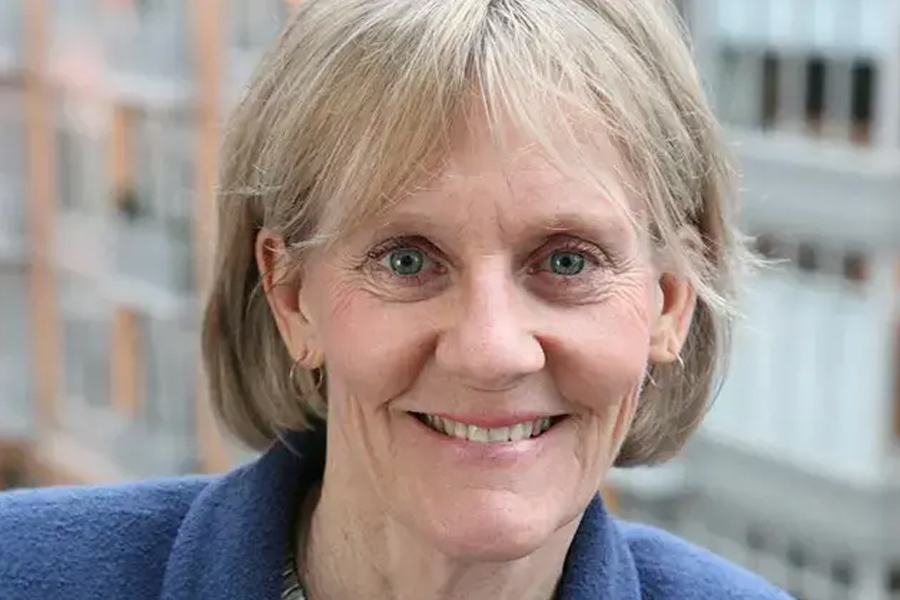
A Life Built Around Cities
I see Elinor Bacon as one of those rare bridge builders who moves fluidly between public service and private development, stitching together policy, design, and the lived reality of neighborhoods. Her name surfaces where cities pivot toward inclusive revitalization, where old waterfronts wake up, and where mixed-income housing is not an abstract idea but a set of homes, porches, streets, and corner stores. From Washington, DC to the national conversation on public housing reform, she has shaped projects and programs that aim to restore dignity, opportunity, and urban delight.
Early Life and Education
Elinor’s foundation reaches back to the early 1960s, with ties to Bennington College that reflect her broad intellectual curiosity and interdisciplinary bent. She earned a bachelor’s degree from The New School for Social Research, a place known for inquiry and civic engagement. She went on to complete a master’s in Chinese studies at the University of California, Berkeley, which hints at her appetite for understanding complex systems, cultures, and histories. I read this academic path as a compass that points toward nuance and synthesis, both essential in the world of citymaking.
Public Service and HOPE VI
Her public profile rises decisively with her leadership in the US Department of Housing and Urban Development. As Deputy Assistant Secretary in the Office of Public Housing Investments from 1997 to 2000, she helped administer HOPE VI at a time when cities were wrestling with the legacy of distressed public housing. I think of HOPE VI as a hinge moment, a chance to reimagine sites into mixed-income neighborhoods with better design, more safety, and stronger connections to jobs and schools. Elinor worked to align the program’s capital investments with design principles that support walkable streets, housing diversity, and community amenities. It was not just a budget line or a grant cycle. It was strategy and stewardship.
Launching a City Instrument
After HUD, Elinor stepped into a role that demanded both political savvy and development know-how. In 2001 she became the first president and chief executive of the National Capital Revitalization Corporation, a public real estate development entity created to jumpstart economic development in Washington, DC. I picture that task as assembling a complex orchestra. It required collaboration with agencies, neighborhoods, and private partners, all while keeping an eye on timelines, land deals, and public outcomes. It laid down a pathway for projects that would alter the city’s trajectory.
E.R. Bacon Development and Private Practice
By 2002, Elinor had founded E.R. Bacon Development, LLC, a Washington-based firm with a focus on urban infill, mixed-use, mixed-income development, affordable housing, and adaptive reuse. I admire the clarity of that focus. Urban infill is both delicate and powerful. It asks a developer to complete the fabric rather than replace it, to find value in historic structures and corner lots, and to build for a range of incomes and ages. Her path also includes earlier private-sector work running Bacon and Company, a practice that built her skills in the mechanics of development and community engagement.
The Wharf and Waterfront Transformation
Elinor’s role as a partner in Hoffman-Madison Waterfront connects her directly to The Wharf in Southwest DC, one of the most visible and celebrated urban waterfront redevelopments in the country. The Wharf is a layered experience of promenades, marinas, parks, theaters, markets, offices, and homes. It feels like a place where public space was given center stage, where buildings protect and energize the street, and where water is not a boundary but a front stoop. I experience this project as a demonstration of how large-scale development can still honor walkability, local character, and community programming. The Wharf suggests that great waterfronts are not simply views but networks of uses and daily rituals.
Recognition and Professional Community
Elinor’s work has been recognized in the design and planning worlds, including the Seaside Prize, which she received alongside architect and urbanist Ray Gindroz. The prize spotlights contributions to building livable communities grounded in traditional urban principles. She is also counted among the fellows in the community of New Urbanism, engaged in panels, forums, and mentoring. When I listen to her story, I hear a consistent emphasis on design quality, neighborhood scale, and the social fabric that good streets support.
A Family Portrait Rooted in Cities and the Arts
Elinor comes from a family steeped in creativity and civic vision. Her father, Edmund N. Bacon, was the renowned Philadelphia planner whose influence still ripples through the field, and whose ideas live on in the book Design of Cities. Her mother, Ruth Hilda Holmes, anchors the family’s personal history. Among her siblings, composer Michael Bacon brings a rich musical life to the family tableau, while Kevin Bacon is widely known for his film and music career. Her sister Karin is a creative force in event production, and her sister Hilda is part of the extended family narrative that threads through public records and memories. Another sister appears in family references as Kira or Prudence, illustrating how families carry stories with multiple names and affectionate variations. I sense in this family a blend of civic design, performance, and invention that shaped Elinor’s own voice as a city builder.
Selected Milestones
I find it helpful to mark Elinor’s path through a few anchor points that show the arc of her work.
- Early 1960s ties to Bennington College reflect an interdisciplinary starting point.
- Bachelor’s degree from The New School for Social Research lays a foundation of inquiry and public life.
- Master’s degree in Chinese studies at UC Berkeley signals analytical breadth and global perspective.
- Twelve years of private-practice experience leading Bacon and Company deepen her development toolkit.
- 1997 to 2000 service at HUD places her at the center of public housing investment and the evolution of HOPE VI.
- 2001 leadership launch of the National Capital Revitalization Corporation demonstrates public development capacity.
- 2002 founding of E.R. Bacon Development cements a long-term commitment to urban infill and mixed-use neighborhoods.
- The Wharf partnership illustrates large-scale, design-forward waterfront revitalization with lasting civic impact.
- Professional fellowships and awards reflect continuing engagement with urbanism communities and thought leadership.
How She Thinks About Urbanism
When I read Elinor’s body of work, I hear an emphasis on integrated neighborhoods, affordability that is real and durable, and public space that serves everyday life. The vocabulary is familiar to those of us who love cities. Streets that feel safe and interesting. Buildings that create edges and invite porches and stoops. Blocks that mix incomes and uses without apology. Policies that push investment beyond single buildings to entire districts. I imagine her approach as one part craft, one part governance, and one part culture.
FAQ
Who is Elinor Bacon?
Elinor Bacon is an American housing and real estate practitioner known for leadership in public housing investment, mixed-income redevelopment, and urban infill. She has served in senior federal roles, led a public development corporation in Washington, DC, and founded E.R. Bacon Development, a firm focused on mixed-use, mixed-income projects.
What did she do at HUD?
She served as Deputy Assistant Secretary in the Office of Public Housing Investments from 1997 to 2000, where she helped administer HOPE VI and related capital programs that aimed to transform distressed public housing into mixed-income communities with better design and services.
What is E.R. Bacon Development?
E.R. Bacon Development is her Washington-based firm, founded in 2002, specializing in urban infill, mixed-use and mixed-income development, affordable housing, and adaptive reuse. I think of it as a practice that builds neighborhoods with an eye toward long-term community health.
How is she connected to The Wharf in DC?
Elinor is part of the Hoffman-Madison Waterfront partnership that developed The Wharf. Her role aligns with her broader commitment to mixed-use urban districts, waterfront public space, and neighborhood-scale design that supports local life and commerce.
Who are her notable family members?
Her father is the influential planner Edmund N. Bacon. Her mother is Ruth Hilda Holmes. Among her siblings, Michael Bacon is a composer and musician, Kevin Bacon is a well-known actor, and Karin Bacon is a creative producer. Her sister Hilda is part of the family lineage, and another sister is referenced as Kira or Prudence in family records.
What awards has she received?
She received the Seaside Prize alongside Ray Gindroz for work connected to livable community design and the advancement of traditional urbanist principles. She is also recognized within the New Urbanism community and participates in professional forums and mentoring.
What is her approach to mixed-income development?
I see her approach as balancing design quality, financial feasibility, and social outcomes. It means building neighborhoods where market-rate and affordable units coexist, where public space and local services are integral, and where long-term stewardship matters as much as ribbon cuttings.
Is there public information about her net worth?
No authoritative public figure is commonly cited. The public record focuses on her roles, projects, and contributions rather than personal finances.