A name, a passport, and a puzzle
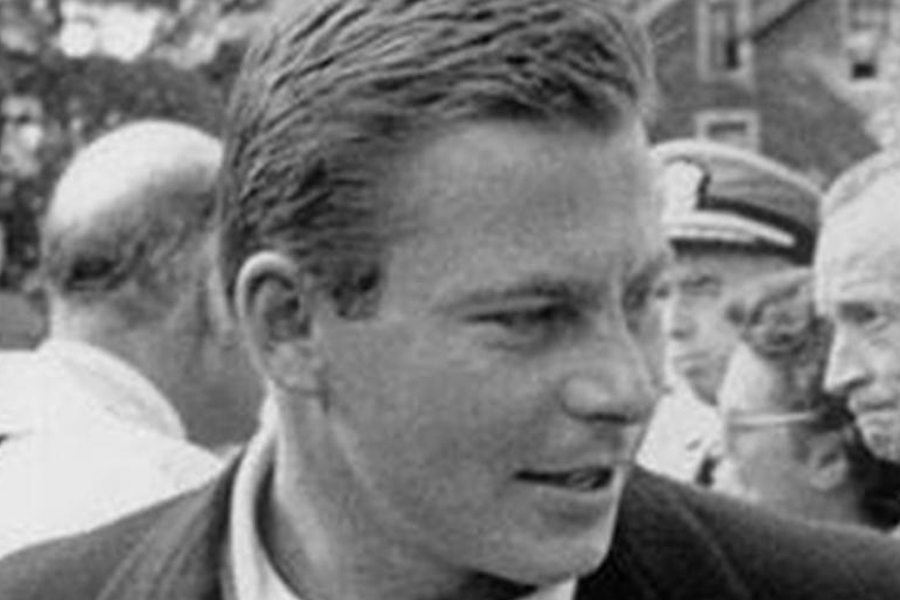
I have always been drawn to lives that run along the seams of history, and Michael Temple Canfield’s story sits right on that stitching. Born with the name Anthony Kerslake, sometimes recorded as Anthony Karslake, on August 20, 1926, and later adopted into the prominent Canfield publishing family, he seemed both anchored and unmoored, a figure at home in embassies, editor’s offices, and elegant drawing rooms. His life ended suddenly on December 20, 1969, with a heart attack aboard a BOAC flight from New York to London, a final journey across the Atlantic that mirrored the route he navigated for much of his adult years.
Early life and adoption
Michael’s earliest chapter opens with the simple yet resonant fact of adoption. Taken in as an infant by Augustus Cass Canfield, the influential publishing executive often known simply as Cass Canfield, and Katherine Temple Emmet, he entered a household steeped in letters, culture, and public life. Public records keep his birth name in view, Anthony Kerslake or Karslake, and then turn the page to the Canfield name, an identity that would place him close to the center of American publishing and its international orbit.
The Canfield family background
Cass Canfield’s own lineage threaded through American society and publishing, with parents Augustus Cass Canfield and Josephine Houghteling positioned in those genealogies that populate family histories and literary circles. The Canfields were not merely custodians of books; they were influencers of taste and thought, shaping catalogs and careers. Michael grew up with that wind at his back, a certain confidence and connectivity that would carry him across oceans and into rooms where ideas were currency.
Education and formation
Michael’s education is cited in biographical entries as Brooks School and later Harvard University. He was the kind of figure who seemed ready-made for the mid century world of polished diplomacy, polished prose, and polished manners. Even as his life would later be remembered for marriages that stirred society columns and for memberships in elite clubs, it was his early education that set the cadence for a career moving between public service and the book world.
Diplomacy in London
During the Eisenhower years, Michael served as a secretary at the United States Embassy in London. On paper it sounds administrative. In reality it placed him right where American policy met British tradition, where the new energy of postwar America negotiated with the old rhythms of Westminster and Mayfair. These were years of cultural exchange and quiet leverage, and his desk in London became a vantage point from which he could see the Anglo American relationship coming into focus.
Publishing as a passport
After embassy service, Michael shifted to publishing, working as a representative for Harper and Row in London. The house was led by his adoptive father, and he moved within a world where manuscripts were bridges and sales were dialogues between continents. If diplomacy had made his pen formal, publishing made it conversational. He had a gift for the social texture of the trade, the dinners, the club rooms, the phone calls that could turn a proposal into a book on a shelf.
Love, marriage, and the luminous circle of Lee Bouvier
On April 18, 1953, Michael married Caroline Lee Bouvier, known to most as Lee. She was poised, sharp, and famously connected as the younger sister of Jacqueline Kennedy. Their marriage soon became part of the fabric of mid century high society. They moved in London circles, where Michael’s work and Lee’s social artistry made them a pair to watch. The union ended in divorce in 1958, and a later Catholic annulment was granted in the early 1960s. Lee would go on to marry Prince Stanislaw Radziwill, becoming a fixture of European society. For Michael, the marriage to Lee sits in the record as both personal milestone and public spectacle, a reminder that intimacy can become a headline when families are famous.
Laura Charteris and a second act
Michael married again on June 13, 1960, to Frances Laura Charteris in a civil ceremony in Amersham, Buckinghamshire. With Laura, he entered yet another circle of British aristocratic life. She would later marry John Spencer Churchill, the 10th Duke of Marlborough, and become the Duchess of Marlborough. The social histories are clear on how connected these lives were, how names like Charteris and Spencer Churchill cast long shadows over English society. Michael’s second marriage situates him among those stories, a transatlantic gentleman whose friends and family filled the index of memoirs and clubs.
Clubs, addresses, and a map of prestige
When I picture Michael’s London, I see Eaton Square and the discreet brass plates of White’s. I see the Knickerbocker Club in New York, where a certain kind of American gentleman toggled between finance, publishing, and diplomacy. Society columns noted his memberships with the approving tone that signals standing and access. There was even a period when his London residence was known as Canfield House, an address that announced lineage as much as location. These details matter because they show the paths he walked each day, the spaces where introductions were made and deals took shape.
Death at altitude, legacy at ground level
On December 20, 1969, Michael died of a heart attack aboard a BOAC flight from New York to London. He was 43. The starkness of that ending never fails to catch me. He was in motion, between worlds as usual, and the journey simply stopped. Obituaries noted the shock, but the memory that persists is of a man who had come to represent a kind of mid century elegance. Diplomatic, literary, connected, and yet always a little enigmatic.
Family facts and the rumor mill
The most persistent gossip about Michael’s life involves his birth parentage. Over time, memoirs and whispered stories suggested connections to Prince George, Duke of Kent, and the socialite Kiki Preston. The rumor is repeated often enough to have a life of its own, yet it remains unconfirmed. Public records maintain his birth name and the fact of his adoption, and stop there. I think of such stories as the fog around a lighthouse. They swirl and glow, but the bedrock remains the beacon of what is recorded and what can be verified.
Money, status, and what cannot be measured
People sometimes ask about Michael’s net worth, as if a ledger could define his life. There is no credible public estimate tied to him. He was born into obscurity, adopted into prominence, and carried himself in a way that suggested ease and privilege. That is not the same as a bank number. The visible wealth was often that of the rooms he occupied and the circles he kept. The private ledger sits behind the curtain.
Timeline in brief
Born in 1926, with public listings placing his birth under the name Anthony Kerslake or Karslake and registered in Switzerland. Adopted by Cass Canfield and Katherine Temple Emmet as an infant. Educated at Brooks School and Harvard. Worked in London during the 1950s, first in the U.S. Embassy, then representing Harper and Row. Married Lee Bouvier in 1953, divorced in 1958, and that marriage later received a Catholic annulment. Married Laura Charteris in 1960. Died in 1969 while traveling from New York to London.
How I see him
Michael Temple Canfield strikes me as a figure who embodied the elegant hustle of his era. He collected rooms rather than trophies, conversations rather than headlines. His life reads like a well edited volume where the margins tell you as much as the text. The diplomat’s poise, the publisher’s charm, the clubman’s ease. He moved through the world as if crossing a well tended lawn, then disappeared at the edge of it, leaving his name etched lightly but indelibly on the decade.
FAQ
Was Michael Temple Canfield born with the name Michael?
No. Public records list his birth name as Anthony Kerslake, sometimes recorded as Anthony Karslake. He was adopted by Cass Canfield and Katherine Temple Emmet as an infant and became Michael Temple Canfield.
What did he do at the U.S. Embassy in London?
He served as a secretary during the Eisenhower administration. The role placed him at the administrative and diplomatic heart of the Anglo American relationship at a time of rebuilding and strategic alignment.
Did he work in publishing because of his adoptive father?
Yes. After embassy service he represented Harper and Row in London. The company was led by his adoptive father, Cass Canfield, which gave Michael both a platform and the networks that define international publishing.
Who were his spouses and what became of those marriages?
He married Caroline Lee Bouvier on April 18, 1953. They divorced in 1958, and the marriage later received a Catholic annulment in the early 1960s. He married Frances Laura Charteris on June 13, 1960. Laura later married John Spencer Churchill and became the Duchess of Marlborough.
Are the rumors about his biological parentage proven?
No. Speculation about royal connections circulated in society memoirs and gossip but remains unverified. Public records note his birth name and adoption, and do not provide confirmed details beyond that.
Where did he live and socialize?
He lived in London, with an Eaton Square address known as Canfield House, and belonged to White’s. In New York he was a member of the Knickerbocker Club. These affiliations reflect his social milieu and recurring transatlantic lifestyle.
How did he die?
He died of a heart attack on December 20, 1969, while aboard a BOAC flight from New York to London. He was 43.
Is there any reliable information on his net worth?
No. There are no credible public estimates of his personal net worth. His public image of affluence reflects family connections and social position rather than documented financial figures.